

Internationally renowned MFA opens the door to a new, expanded undergraduate offering
When Emily Kellogg began her journey in the Master of Fine Arts in Creative Writing, she arrived ready to explore her voice as a non-fiction writer. Drawn to the program because of its small, intimate feel, she wanted an environment that supported yet challenged her.

Kellogg was already familiar with certain aspects of the Canadian publishing scene. She took some time after her undergrad working at Second Story Press and then for the Association of Canadian Publishers.
Though rewarding and inspiring to be among writers, Kellogg felt she was helping others pursue their passions, not pursuing her own.
“This program is about making space for new and different voices,” she says. “It doesn’t shape you into a specific kind of writer but enables you to find your own voice as a writer and opens new avenues to do that.”
Among her fellow students, Kellogg felt a distinct camaraderie devoid of competitiveness that nourished the flexing of her pen. Writing can be such a solitary practice, she says, but community is what sustained her in the cultivation of her craft.
In the two-year program, Kellogg wrote a play, a book of poetry, a screenplay and a novel.
Experimenting with multiple genres excited her and led her to develop new skills. She has since created, written and produced two fiction podcasts. Parkdale Haunt, about the nightmare that is Toronto real estate, was honoured with three Canadian Podcast Awards and Woodbine, a supernatural tale complete with detectives, monsters and mystery also set in Toronto.
“Everyone I learned from, all the professors, are committed to making sure it is a very diverse and unexpected experience,” says Kellogg, now a sessional instructor in the School of Continuing Studies.
A professional atmosphere that encourages vulnerability in a safe and supportive way is what makes creative writing at U of G so special, she adds.
Socially conscious programs, diverse faculty and evolving genres
“At Guelph we’ve always been very socially conscious in our teaching and in our creative writing courses,” says Canisia Lubrin, coordinator of the graduate program in the School of Theatre, English, and Creative Writing.
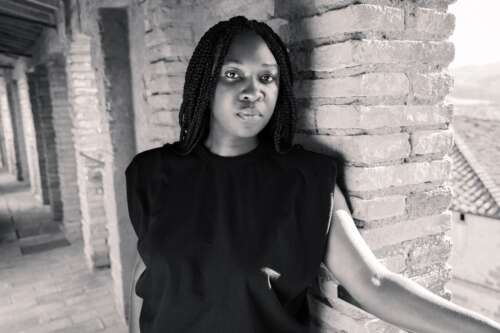
Lubrin, like many of the U of G creative writing faculty, understands her students as a fellow practising writer. The books of the award-winning poet, editor and author – Code Noir, The Dyzgraphxst and Voodoo Hypothesis – have graced CBC and The Globe and Mail best-of lists in addition to being honoured with the Windham-Campbell Literature Prize, the Griffin Poetry Prize, the Derek Walcott Prize for Poetry, the Danuta Gleed Literary Award and the Carol Shields Prize for Fiction.
“Students can come here and take some risks,” she says. “We don’t put limits on the kinds of work our students can do but encourage them to enter their own unique visions of what their work will do.”
The MFA is a highly sought-after program in Canada, attracting more international students each year, with extraordinary faculty that has included Dionne Brand, Lawrence Hill, Thomas King, Judith Thompson and Kyo Maclear, among others. Students complete a book-length work that becomes their thesis, many of which have gone on to become critically acclaimed, award-winning works.
“The reputation of the program is a great boost for students,” Lubrin says. “We emphasize both the philosophical and creative life of the writer.”
Guest visitors from the broader echelon of the industry – agents, editors, small press publishers, screenwriters, producers – also elevate the program’s esteem among the most elite creative writing programs in the world. Alumni include writers like Jael Richardson who founded FOLD, The Festival of Literary Diversity, a highly impactful, game-changing space for underrepresented storytellers.
“It’s a fantastic program with a brilliant foundation that has grown very carefully, and is continuing to grow in robust ways,” Lubrin says. “We make sure we can support those students writing in evolving genres and evolving modes.”
A program as rigorous as any other
In Carrianne Leung’s classroom, the seats are full. For the first time, undergraduate students are now able to pursue creative writing as a major, a response to demand for a more comprehensive offering.
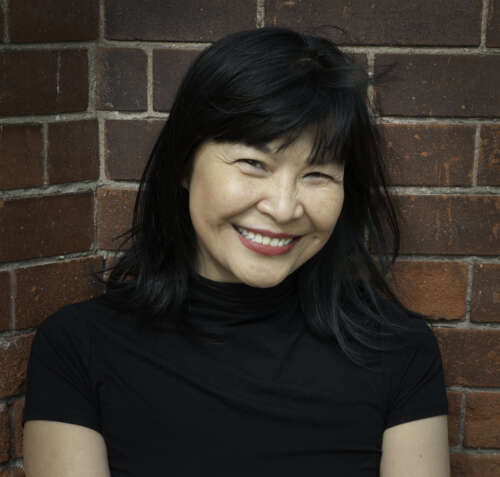
The award-winning author of That Time I Loved You and The Wondorous Woo teaches in both the MFA and the undergraduate program, whose first cohort will graduate next year. There are currently three dedicated faculty – novelist Catherine Bush, Leung and filmmaker and screenwriter Blain Watters – with plans to expand.
“We’re seeing incredible talent and enthusiasm coming out of the undergraduate program,” Leung says. “These students are very intelligent, very aware of what is going on in the world.”
It is what has informed the program’s concentration on environmental and social justice, a continuity Leung was purposeful about bringing from the MFA. The program is thriving, a point of pride because there are not a lot of similar programs available in Canada.
It is as rigorous as any other, Leung says of the program, with a curriculum intentionally built with more industry knowledge as well as a professional practice piece – courses on editing, the business of writing, and encouragement to learn outside the University’s walls, attending readings and festivals and connecting with the publishing industry.
There can be a myth that studying creative writing is not a viable path, Leung notes, but a strong writer is a naturally curious and engaged person, and those skills are critical in any career. This is not just about creating characters and crafting stories. “These students are world-making in a larger sense, not just on the page.”