
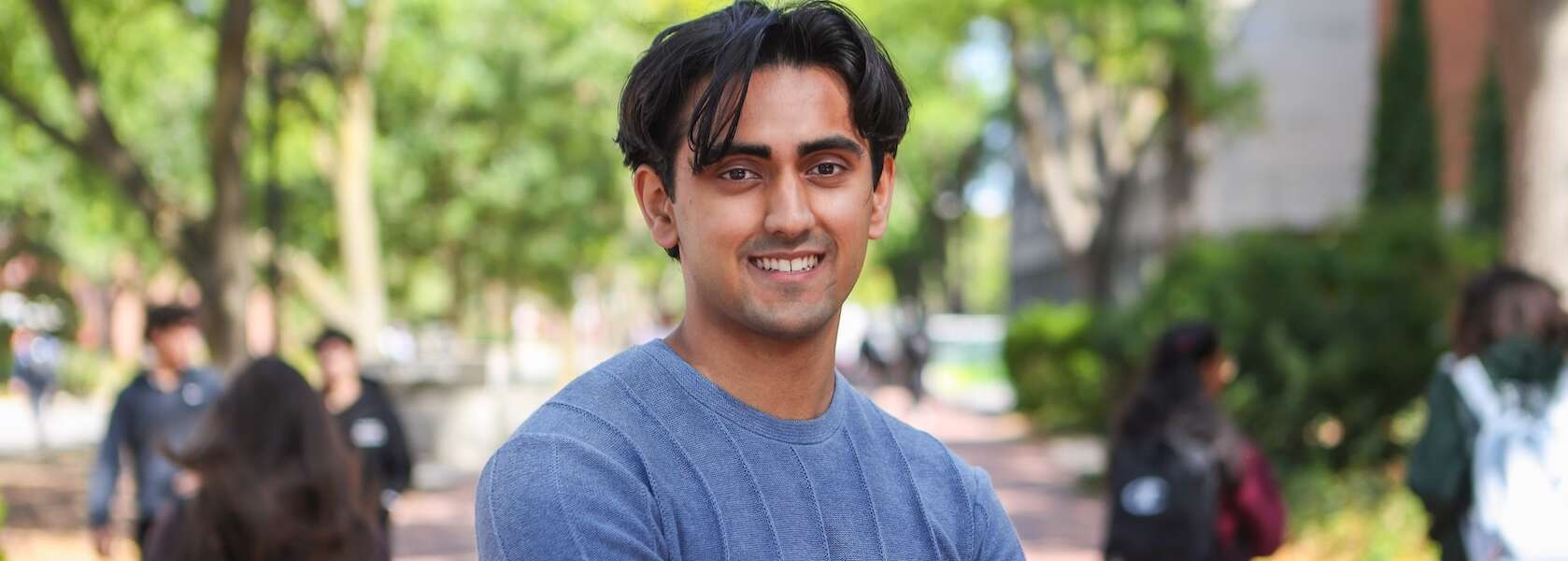
Computer science student develops platform to teach American Sign Language with real-time feedback
For Azish Qureshi, a simple moment between friends became the starting point for a project that now helps people take their first steps into learning American Sign Language (ASL).
The third-year computer science student is the creator of Signiq, an AI-powered platform that teaches ASL fingerspelling through real-time feedback.
Combining computer vision, machine learning and accessibility-focused design, the platform lets learners practice signing directly through a web browser while receiving guidance on their progress.
What began as a summer project has grown into a tool used by learners beyond U of G, earning attention from media, accessibility advocates and members of the Deaf community. For Qureshi, it has also been an opportunity to explore how technology can break down communication barriers.
AI powers self-taught language skills
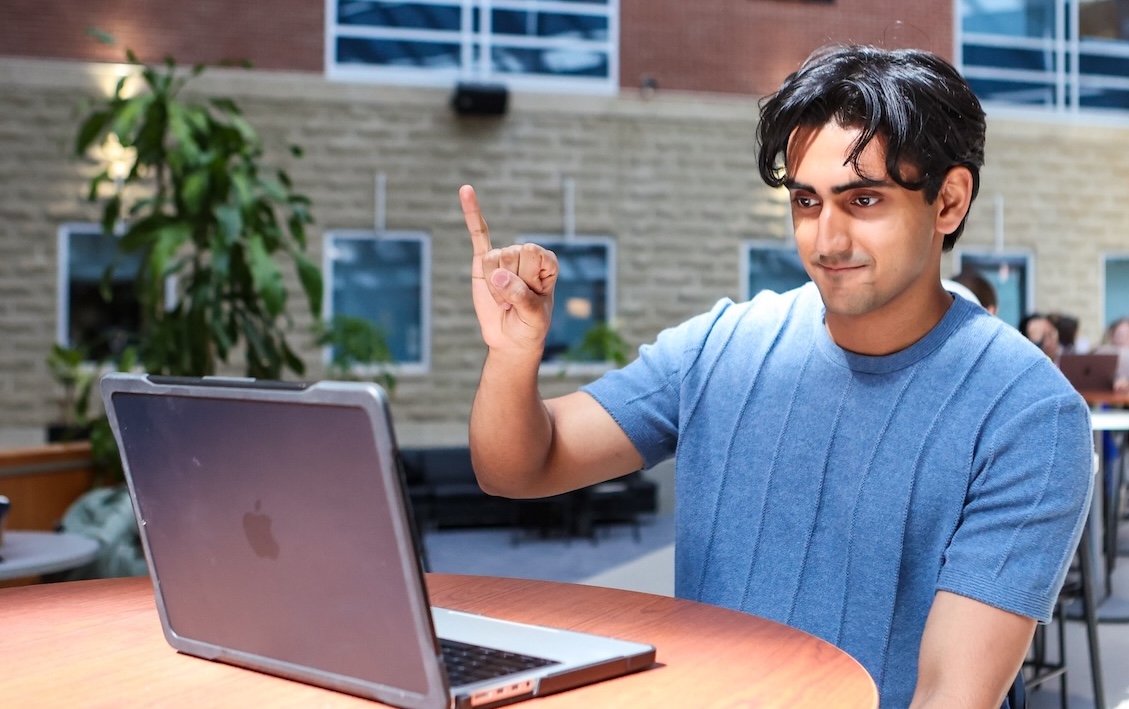
The idea for Signiq was sparked while Qureshi was spending time with a friend who uses ASL to communicate with his parents. It piqued Qureshi’s interest and inspired him to start learning ASL himself.
As he explored fingerspelling, he noticed that many existing resources showed learners the correct handshape but offered little feedback on whether they were signing correctly.
“I realized a lot of the resources were either outdated or lacked an interactive component for me to confirm whether I was doing it correctly,” he says.
For a computer science student who enjoys building solutions, this was a gap worth exploring.
The platform was intentionally designed to make ASL fingerspelling practice more interactive. “The goal is to give learners a way to actively practice rather than only watch demonstrations,” Qureshi says.
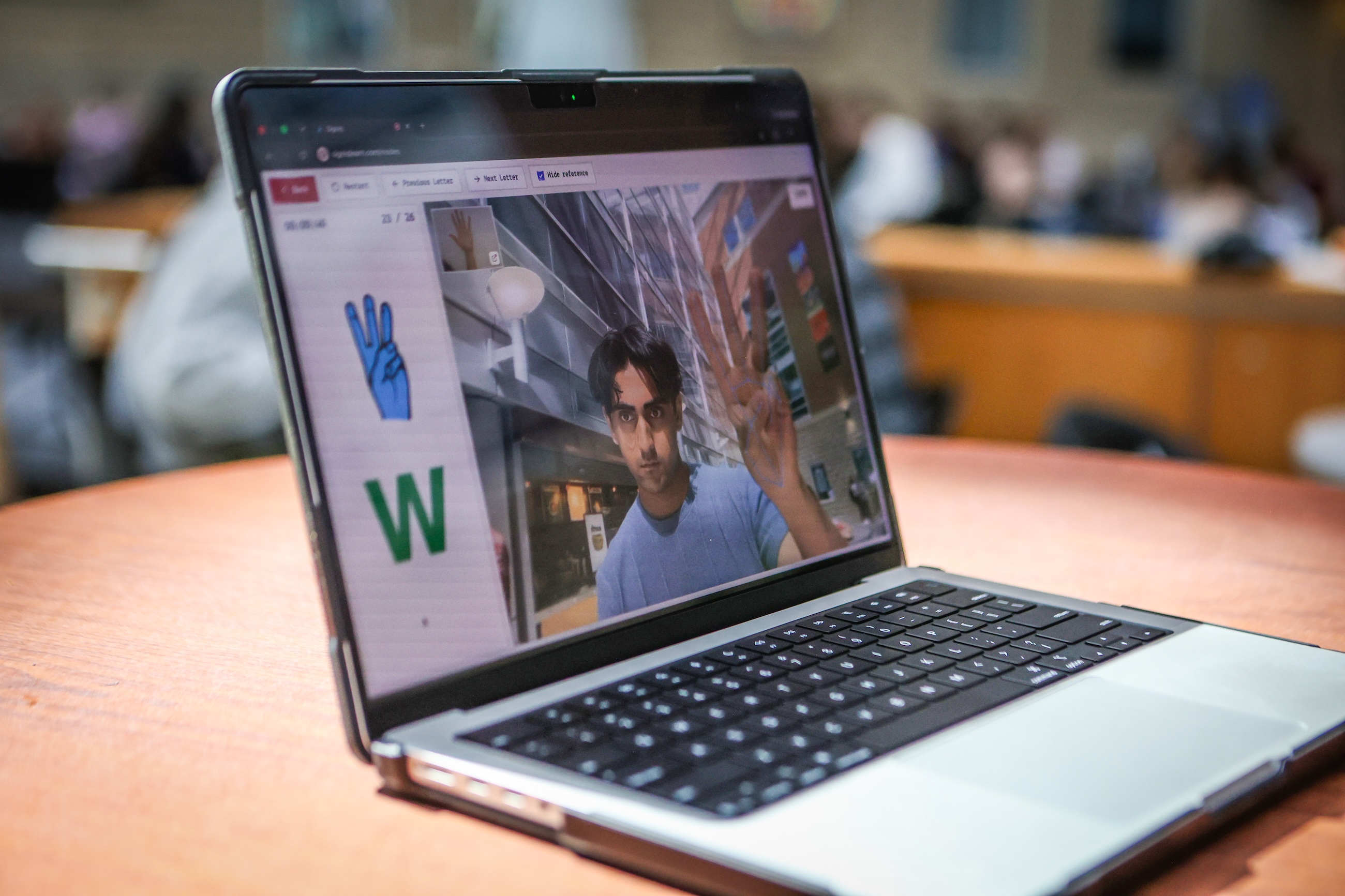
Users open the website, select a practice mode and enable their camera. Signiq then provides image and video references while a computer vision system analyzes hand position and movement in real time.
As users practice, the platform immediately evaluates how closely their handshape matches the target letter. Once a letter is correctly recognized, learners move on to the next challenge. Additional modes allow users to practice complete words, improve their fingerspelling recognition skills and even compete on a global leaderboard.
Input from Deaf community guides platform’s evolution
Friends and classmates were Signiq’s earliest testers, helping identify bugs and suggest features, but Qureshi knew it was important to learn from the people the platform was designed to support. Conversations with members of the Deaf community reinforced an important distinction: practicing individual handshapes is different from natural fingerspelling, where movement, timing and transitions matter.
This input helped guide the platform’s evolution, a reminder of the importance of building alongside users rather than relying on assumptions.
One of the biggest challenges was ensuring the system could reliably recognize signs across different people, devices and environments. Camera quality varies. Lighting changes. Hands look different. Some signs differ only subtly in finger placement. Signs such as J and Z introduce movement rather than static handshapes.
To address this, Qureshi developed separate recognition models capable of interpreting both stationary handshapes and dynamic motion. That required thousands of training images, hundreds of video samples and countless rounds of testing.
“It taught me that when you’re building AI-powered tools, it’s not just about accuracy,” he says. “You have to make sure the technology actually works for the user.”
Building the platform required many of the same skills developed throughout the computer science program: breaking large problems into smaller pieces, testing assumptions and continuously refining solutions.
Computer science and problem solving
While Signiq pushed Qureshi to learn new technologies, it also broadened his perspective of his own education.
“Studying computer science at U of G has helped me develop the programming and problem-solving mindset to take on a project like this,” he says.
The response has been encouraging.
Canadian Hearing Services recognized the project, and users have reached out to share their experiences with the platform, expressing appreciation for its interactive features, and suggesting improvements.
Those interactions marked a turning point – Qureshi’s personal project had become something others found genuinely useful. “It became more real when people outside my own circle started using it and sharing feedback.”
Qureshi continues to expand Signiq, with plans to introduce number recognition and additional learning activities. His long-term goal is not to replace ASL instructors or formal education. Instead, he hopes Signiq can be a tool to make the introduction to ASL a little easier.
“If Signiq helps someone build confidence with the basics of ASL and motivate them to keep learning, I’d consider that a meaningful success.”