
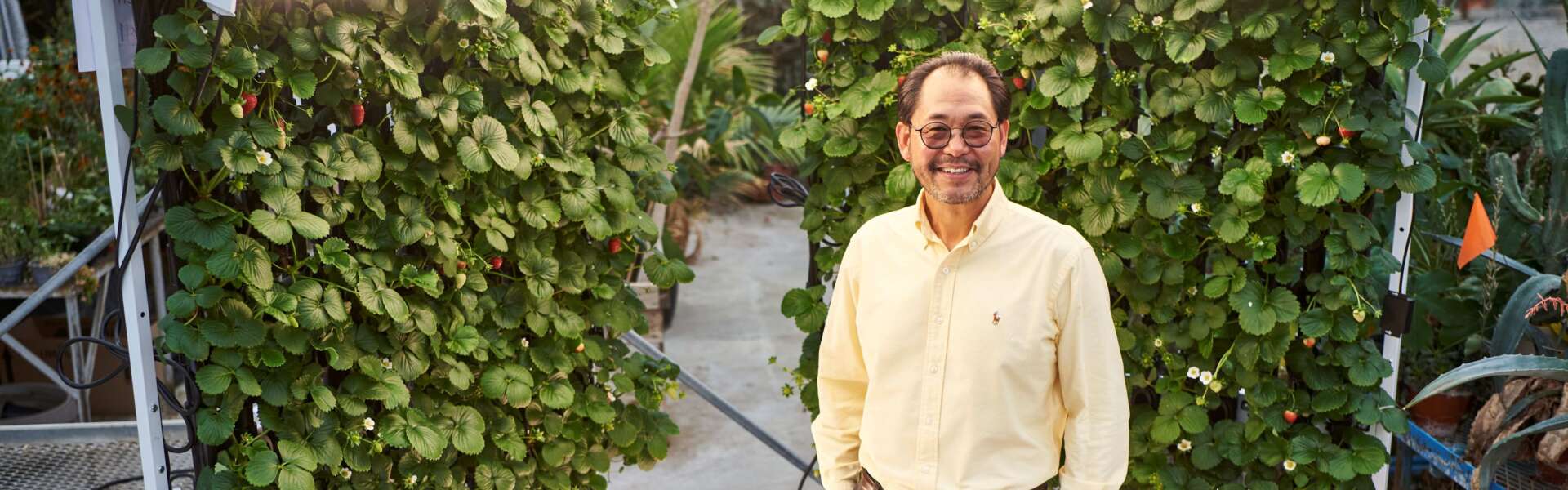
By Dr. Youbin Zheng, professor in the School of Environmental Sciences
This article is republished from Farmtario under a Creative Comms licence. Read the original article here.
Ontario’s food security can no longer depend on existing agricultural land and trade relationships alone. As climate uncertainty grows and geopolitical disruptions reshape global food systems, controlled environment agriculture is shifting from an agricultural innovation to a strategic necessity.
Recent supply chain disruptions, tensions with key trading partners and increasingly volatile weather have exposed vulnerabilities in Canada’s food system. A country that imports half of its vegetables and three-quarters of its fruit cannot assume those supply chains will remain affordable or reliable indefinitely. Given that, it simply makes sense to grow more at home.
But agricultural land isn’t expanding. In Canada, only about seven per cent of land is used for agriculture and it’s being lost at the rate of about 319 acres a day. So how do we grow more with less land and in areas with more built infrastructure?
We grow up. Canada’s vertical farming market is expected to grow by more than 20 per cent between 2022 and 2027. And there are plenty of good reasons why.
Vertical farms addressing land shortages
Vertical farms can grow magnitudes more food per acre than traditional farms, and they’re not subject to the whims of nature and increasingly unpredictable weather. Vertical farming brings food production closer to local markets, with less transportation, and provides fresher, healthier food for consumers while creating agricultural job opportunities close to urban centres and communities. Vertical farming also virtually eliminates the environmental pollution that necessarily results from traditional farming and uses up to 95 per cent less water.
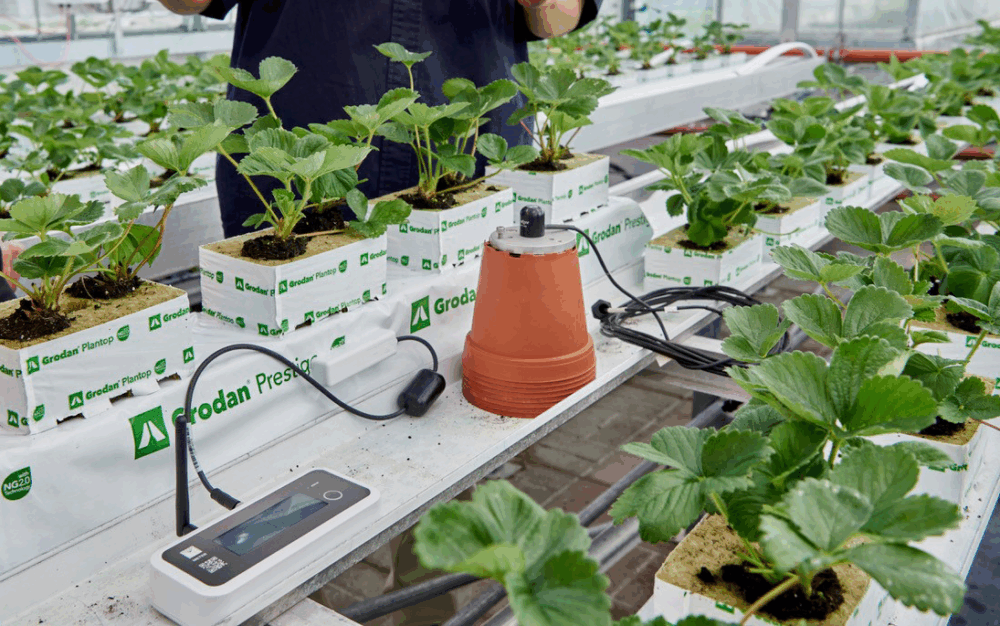
There are drawbacks to vertical farming such as high startup costs, expensive labour and high energy use. But it can pay off. In fact, Canada’s largest vertical farming business, GoodLeaf, recently announced that it has reached profitability across all three of its vertical farms. And robotic farming is making headway to help reduce labour costs.
Meanwhile, researchers are continually looking at ways to reduce the energy footprint of vertical farms, from using more efficient LED lighting to using renewable energy sources like solar. This work needs to be prioritized.
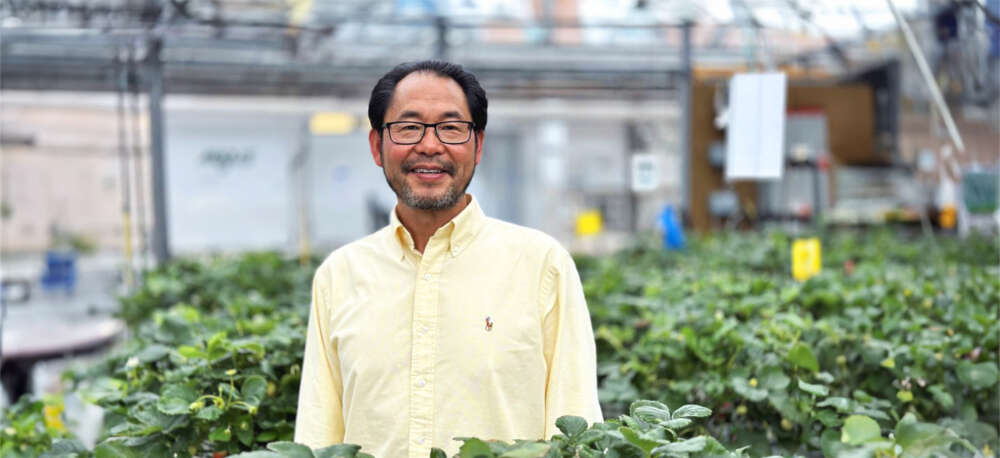
My research at the University of Guelph includes a project to develop technologies for sustainable greenhouse strawberry production. Supported by the Weston Family Foundation and working with government, laboratory and industry partners, our research focuses on energy-efficient lighting, net-zero vertical production systems and autonomous fertigation to enable year-round local strawberry production while reducing costs and environmental impacts.
Investing in ag-tech for resilient food system
And while critics may frame vertical farming as an attempt to replace traditional agriculture, that’s the wrong debate. The future of food production is not a choice between conventional farming and controlled environment agriculture. It’s about determining which crops are best suited to each system and using both to build a more resilient food supply.
Because the question is no longer whether vertical farming can grow food efficiently. The question is whether Ontario can afford not to invest in technologies that make food production less vulnerable to climate shocks, border disruptions and the loss of agricultural land.
As Ontario continues to focus on food security, controlled environment agriculture should be considered critical infrastructure. That means supporting research and innovation through agri-food leadership institutions such as the University of Guelph, reducing barriers to investment and integrating vertical farming into long-term food system planning.
Ontario has spent generations building one of the world’s most productive agricultural sectors. The next chapter will not be written solely in fields and orchards. It will also be written in greenhouses, warehouses and technologically advanced growing environments located close to the communities they serve.
The most resilient food system will not be traditional or vertical. It will be both. Ontario’s future food resilience depends on integrating vertical farming into a deliberate strategy alongside traditional agriculture. In doing so, we’ll be best positioned to feed our populations for decades to come.
The perspectives shared here are those of the author, based on their research and/or scholarly expertise, and do not necessarily reflect the views of the University of Guelph.