
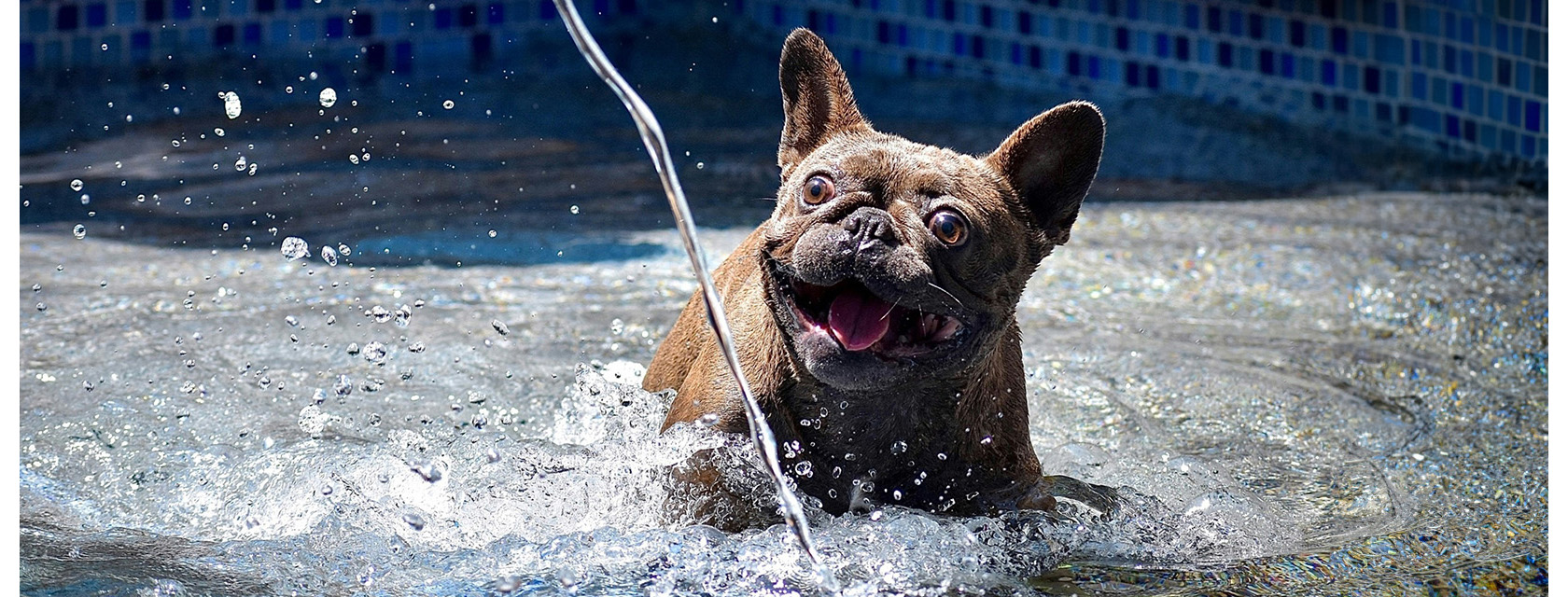
It’s not just humans wilting under this week’s heat wave in Ontario and Quebec. Pets can struggle with the temperatures too and can run into trouble quite quickly, says a University of Guelph emergency veterinary specialist.
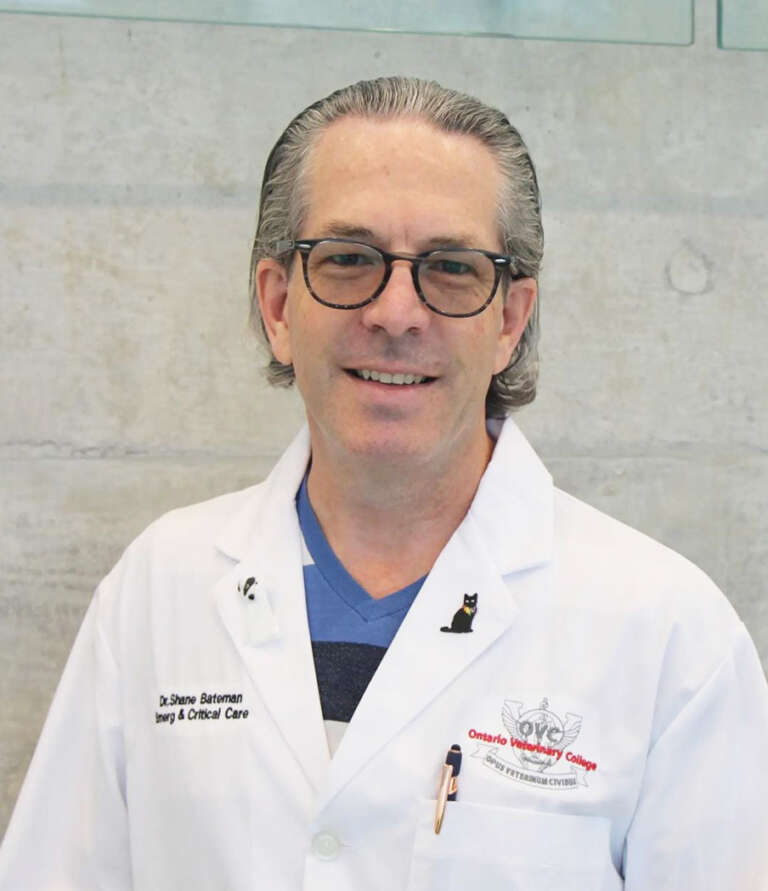
Dr. Shane Bateman is a professor in the Department of Clinical Studies and an emergency and critical care specialist in the OVC Health Sciences Centre at the Ontario Veterinary College.
He says cats have unique vascular adaptations that allow them to tolerate heat, because they can shift their blood supply around their bodies. But dogs are at higher risk of developing heat-related injury.
“Dogs have only a small number of sweat glands in their footpads, so their primary way of regulating body temperature is by panting,” Bateman explains.
Overheating can happen quickly
The lungs of dogs contain many blood vessels, and when they pant, they move air in and out quickly which cools their blood.
But if the air around a dog is very warm, the work of panting further contributes to overheating, says Bateman. Short-snouted dogs, such as pugs and bulldogs, are at the highest risk since they can’t pull air in deeply enough.
“It often only takes minutes for a dog’s body temperature to rapidly increase,” he says.
Another reason dogs are particularly vulnerable to heat illnesses is because they love to interact with humans and will avoid recognizing the signs of distress if they’re engaged in play.
“Dogs’ inherent desire to please their owner can sometimes supersede their own self-preservation,” Bateman says.
Dogs that are becoming overheated might have an expression of panic or anxiety on their face, with their eyes becoming wider. They might also start to drool with a long tongue and their gums might be bright red.
Bateman recommends cooling down a dog by placing them in water up to their mid-torso. Alternatively, spray their body with cool water and place them in front of a fan. If the dog begins to vomit or appears unresponsive, get them to an emergency veterinary clinic.
Dr. Bateman is available for interviews.
Contact:
Dr. Shane Bateman
bateman@uoguelph.ca