

Becky Swainson does not want you to feel bad about where you shop for clothes, or what you do with them once they’re no longer useful.
The University of Guelph PhD researcher is studying textile waste in Canada, hoping people will begin to reshape their relationship with it. Textile waste is a growing problem propelled by fast fashion and a lack of policy to manage the issue, not the responsibility of any one single consumer.
“Canada generates a billion kilograms of textile waste every year, with no real strategy in place at the provincial or federal level to address it,” Swainson says. “I really want to look at how we can do better.”
In recognition of her innovative work, Swainson has been named a 2026 Trudeau Scholar, the most prestigious doctoral award in Canada. The scholarship, from the Pierre Elliott Trudeau Foundation, is a three-year leadership program for doctoral candidates in the humanities and social sciences.
“It is a massive honour to be chosen as a Trudeau Scholar, especially because of the foundation’s goals, and the way it emphasizes making a direct impact through your research,” Swainson says. “I am an academic, but I also want to make a practical difference with my work.”
Guelph a unique place to bridge community, academia
The foundation awards the study of cutting-edge research done by academics who use their position to share and disseminate knowledge for the benefit of others.
“Becky is an outstanding scholar and community builder,” says Dr. Kate Parizeau, professor in the Department of Geography, Environment and Geomatics and Swainson’s PhD advisor.
“This scholarship highlights the importance of her research on textile waste in Canada and acknowledges her expertise in leading this project,” Parizeau says. “The Pierre Elliott Trudeau Foundation provides generous funding, resources and support for critical scholarship in Canada. I know Becky will make a valuable contribution to this exceptional community of thinkers and innovators.”
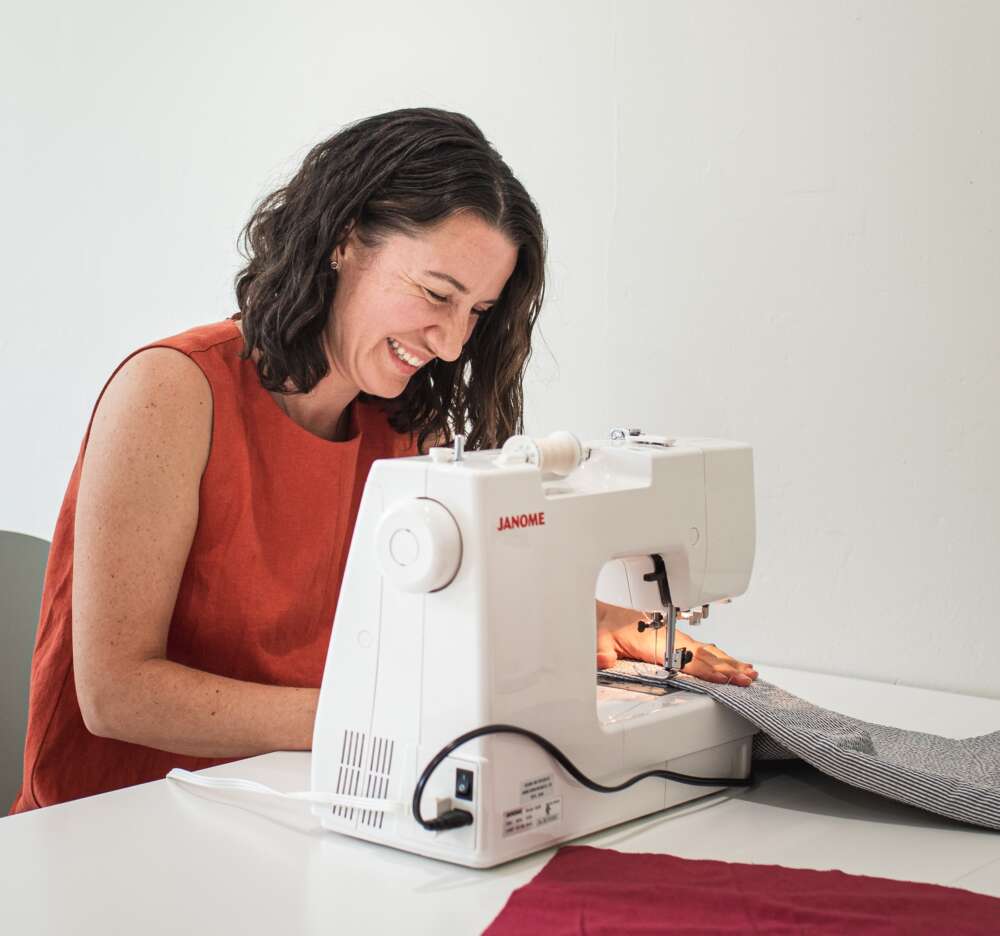
Through her work as a sewing instructor and mending advocate in Guelph, including as a founder of the Stitch Together Community Mending Project at the Guelph Tool Library, she has seen first-hand people’s different relationships with fashion and waste and mending.
Through casual conversations, while teaching, stitching and mending, she began to build an understanding of the issue.
“This was a small but innovative space where people were resisting capitalism and fast fashion,” says the U of G grad who studied environmental science and geography during her undergraduate and master’s degrees.
Though she comes to this work from a community mindset, she does not believe that solving the problem is solely a personal responsibility. Instead, she is interested in studying the broader systems that drive the issue.
“I don’t think the solution is as simple as everyone learning to mend their socks,” she says.
“But can community mending spaces change the way we relate to our clothing and waste? What does it mean to support textile repair? And can local collective action drive larger scale change? These are the types of questions my research asks.”
Textile waste relatively new challenge, rarely studied
The lack of evidence-based policy to promote solutions is what motivated Swainson to begin her PhD in the Department of Geography, Environment and Geomatics, to contribute research that will hopefully inform how to make a difference in how Canada manages textile waste.
“I was surprised to learn this is a relatively new field from a scholarly point of view, especially in Canada, and having the University here allows us to be experimental and collaborate with the community to conduct research in a really interesting way,” she says.
The foundation’s support of Fellows, Mentors and Scholars is aimed at pushing academic boundaries and transforming ideas into action. The goal is to create meaningful impact in their communities and institutions.
Drawn to that philosophy, Swainson says the financial support will strengthen her ability to conduct exciting research while also connecting her to fellow like-minded researchers working on emerging topics to guide policy and action.
Trudeau Scholars attend conferences and retreats across Canada, collaborate on research and publications, and connect with mentors to foster leadership skills.