
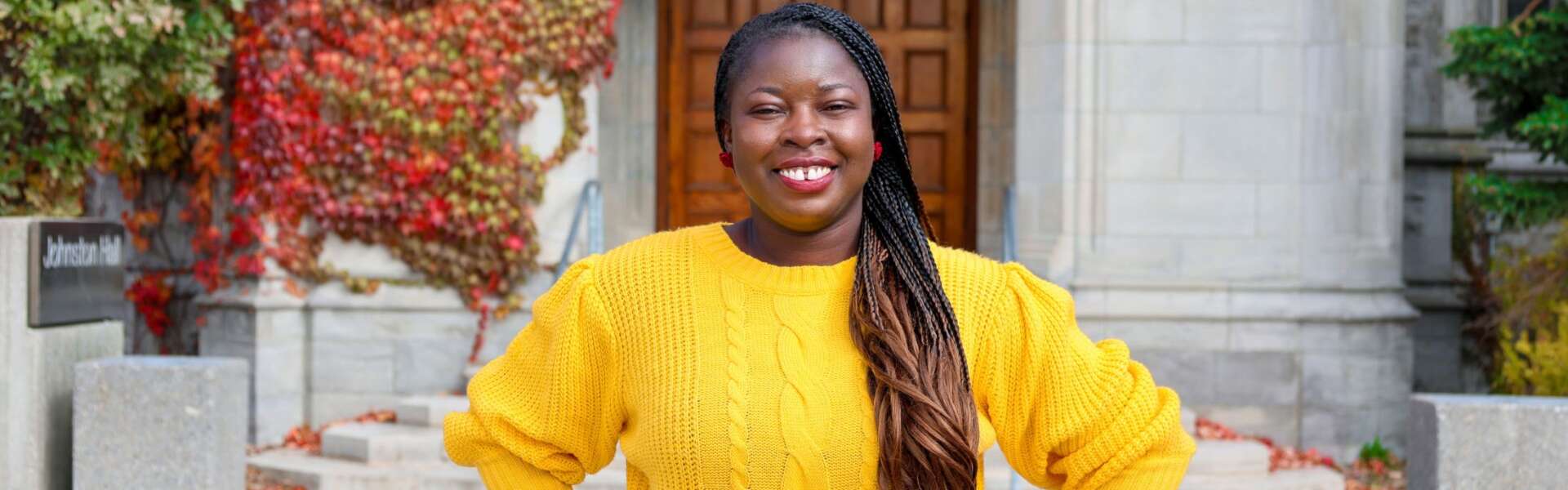
Nigerian climate justice leader chose U of G’s MSc in Food, Agricultural and Resource Economics to explore connections between climate change, economics, agriculture and food security
For Adenike Oladosu, climate change is not a distant threat. It is a challenge affecting food production, livelihoods and communities across Africa, and one she has spent years working to address.a
Oladosu is an internationally recognized climate activist who is bringing her global experience to the University of Guelph where she is enrolled in the MSc in Food, Agricultural and Resource Economics (FARE).
She is the founder of I Lead Climate Action Initiative, a pan-African grassroots movement advocating for climate justice and environmental restoration, including Lake Chad. She has represented Nigerian youth at United Nations climate conferences, received Amnesty International’s Ambassador of Conscience Award, and was named to BBC’s 100 Women list in 2024.
“My climate advocacy reflects the reality around my community, and if we want to feed nations, we must act on the realities of climate change,” says Oladosu. “The Initiative provides a platform that raises awareness of issues that don’t make it to the forefront of the news and how we can solve them.”
Connecting climate change, agriculture and food security
With a degree in agricultural economics from the Federal University of Agriculture in Makurdi, Nigeria, Oladosu worked in Germany examining the relationship between flooding and food insecurity, strengthening her interest in how climate change affects agricultural systems.
“Flooding can destroy crops, degrade productive farmland and threaten farmers’ livelihoods,” says Oladosu. “Understanding these effects requires more than environmental knowledge alone. It also means examining the economic forces that shape food production, trade and access.”
That interdisciplinary approach drew Oladosu to the FARE master’s, where she hopes to develop new analytical skills and build connections with researchers who can help her examine climate challenges from different perspectives.
Working with faculty adviser Dr. James Ji, she is expanding her tools to improve future policy and advocacy work.
“U of G is well-equipped to integrate sustainability into food systems,” says Oladosu. “My master’s program brings an intersectional approach to my grassroots advocacy through policy research and econometric modeling, which I need in my next phase of leadership.”
Oladosu says her master’s program in FARE goes beyond theory.
“I like how the MSc in FARE enables me to apply what we have learned in class to real-world situations — not just theory, but practice.”
Fighting for communities and the environment
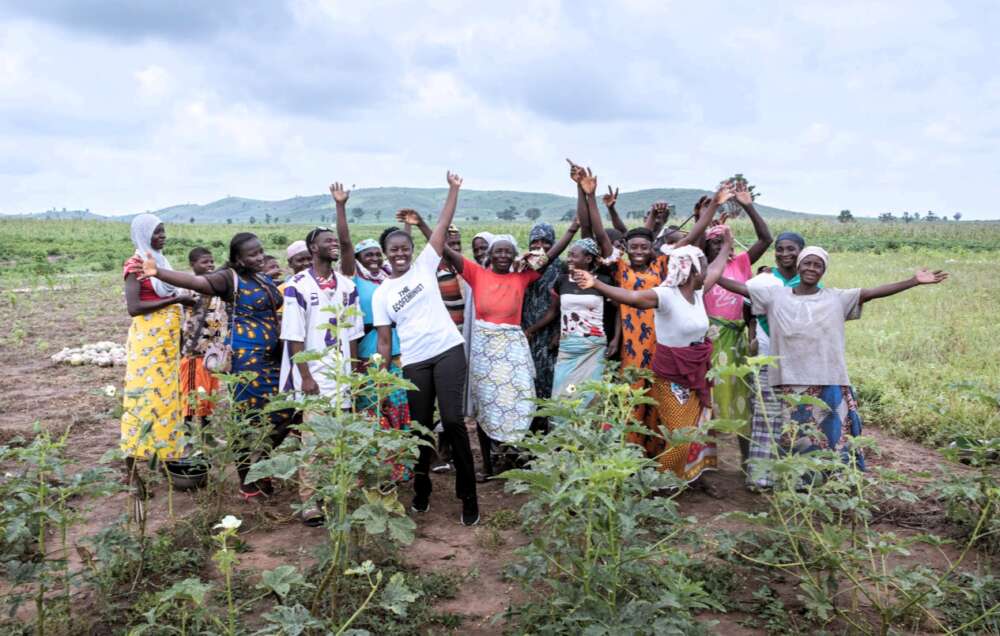
Oladosu describes herself as an ecofeminist, recognizing that environmental challenges often disproportionately affect women and girls.
“During drought and water scarcity, women walk long distances to get water,” says Oladosu. “The average four hours spent each day sourcing water could be channeled into economic activities that empower and generate revenue. For young girls, it could be spent reading or educational activities that could make them changemakers.”
Oladosu says that women’s perspectives are often ignored in sub-Saharan African communities.
“Women comprise the majority of the agricultural workforce in developing nations and are systematically excluded from land ownership, agricultural credit, and climate governance decisions,” says Oladosu. “When environmental disasters strike, local adaptation boards and national policy discussions rarely include women’s voices.”
Oladosu’s master’s studies offer an opportunity to connect her community-level experience with economic analysis, helping her identify potential solutions to improving climate change awareness and women’s rights.
Bringing global perspectives to climate action
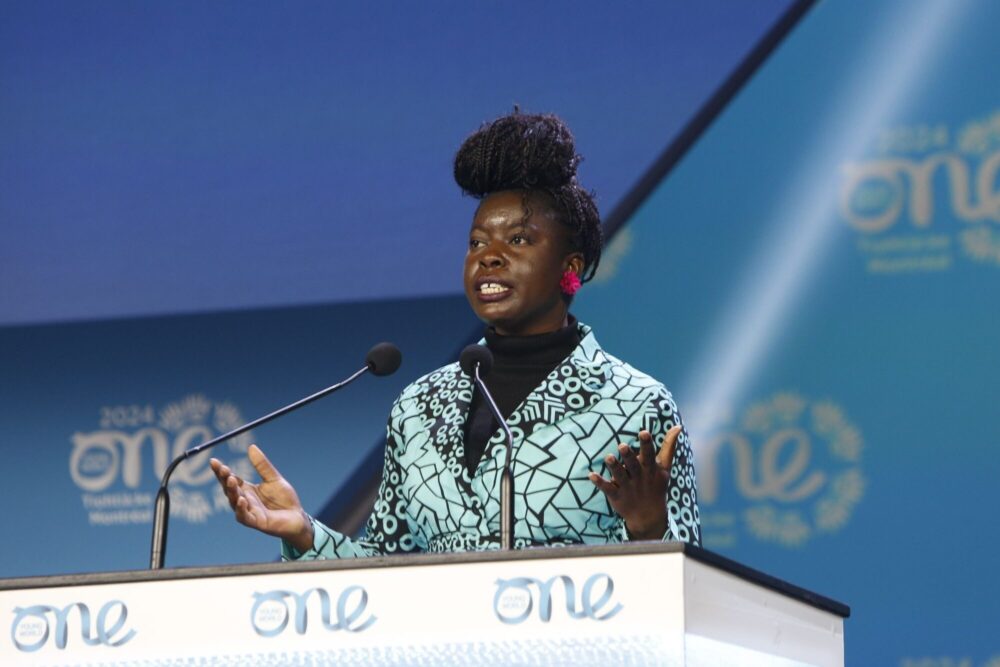
This month, Oladosu served on the advisory board for the global Falling Walls Summit in Berlin. The initiative connects projects from around the world with advisers to take their climate change solutions to the next level.
Oladosu is one of four people from around the world to be selected as an advisor.
“This conference is a space to learn, get encouraged, and connect with people working to address the climate crisis,” says Oladosu. “I am blown away by the incredible ideas and what these changemakers seek to achieve.”
Oladosu says the conference sparked new ideas for herself and the world.
“I was inspired by the big ideas from scientists, advocates, and academia,” says Oladosu. “When I tell the people I met that I am a master’s student at the University of Guelph, I get positive comments about the university’s work on climate change and agriculture.”