
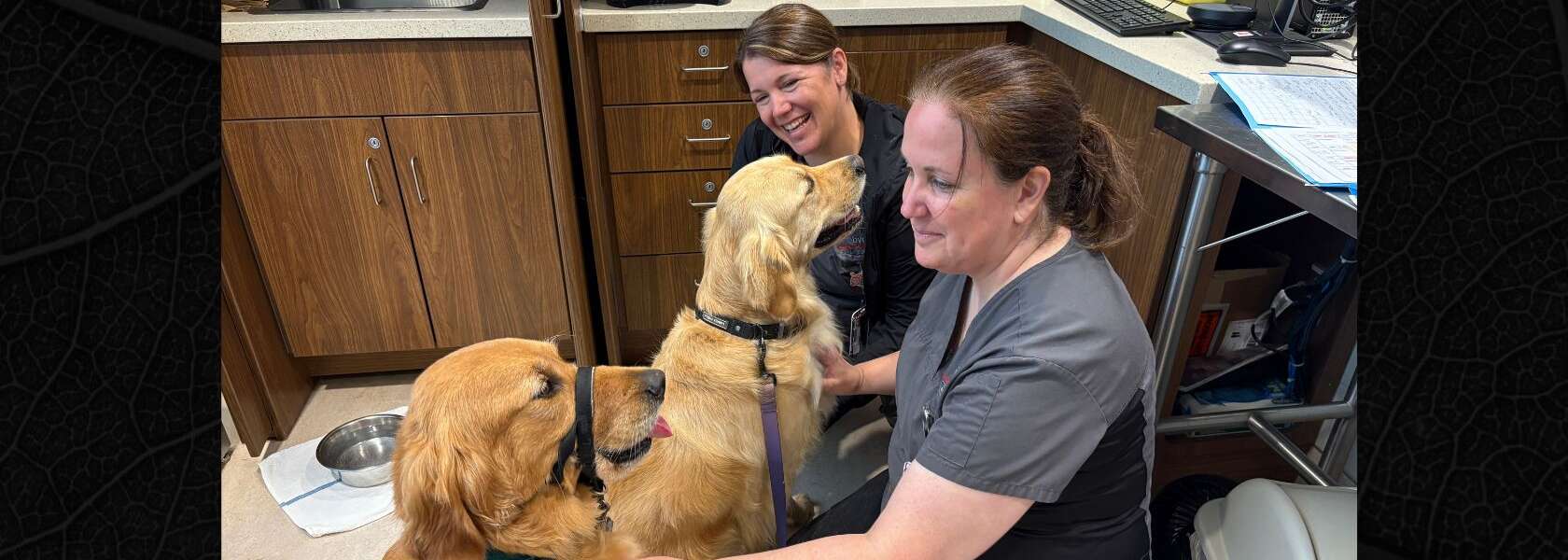
Blood donations used to help dogs receiving care in OVC’s Companion Animal Hospital
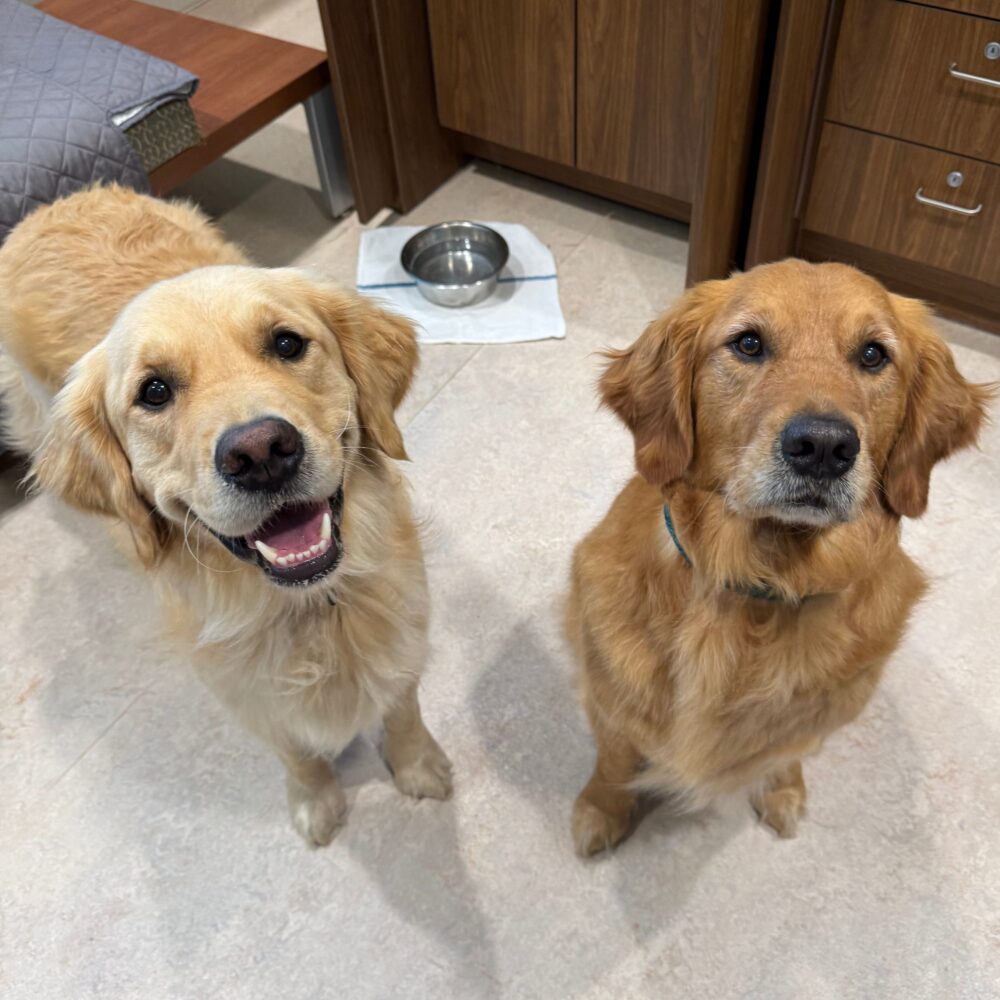
Dash and Oakley may have just saved another dog’s life.
The pair of golden retrievers just wrapped up their fifth blood donation, adding to a supply that will be ready for emergencies.
“You always know there’s someone out there who’s going to need it,” says their caregiver, Lori Colquhoun.
As a highly specialized animal hospital, the Ontario Veterinary College’s Health Sciences Centre (OVC HSC) cares for the sickest of the sick animals. Donations collected through the program play an invaluable role in emergency and critical care.
“OVC clinical teams diagnose and treat traumatic injuries, including complicated surgeries with resulting blood loss, as well as other medical blood disorders that need life-saving transfusions,” Dr. Shauna Blois, a board-certified internal medicine specialist and professor in the Department of Clinical Studies. “Having this blood right on hand helps prepare us for any emergency or disease that may require a dog to need blood.”
Blood for emergency vet care
There are approximately 500 transfusions given at the OVC hospital each year. A single donation can help up to four different patients.
Colquhoun is no stranger to the veterinary services offered at OVC. She first came to the OVC hospital with her late golden retriever Kaya, who was diagnosed with lymphoma.
“I was in the waiting room while she got her chemo treatments and an advertisement came up on the TV screens talking about donating blood,” she says. “I had no idea that this even existed and thought that it would be a great way to offer hope for other dogs in need.”
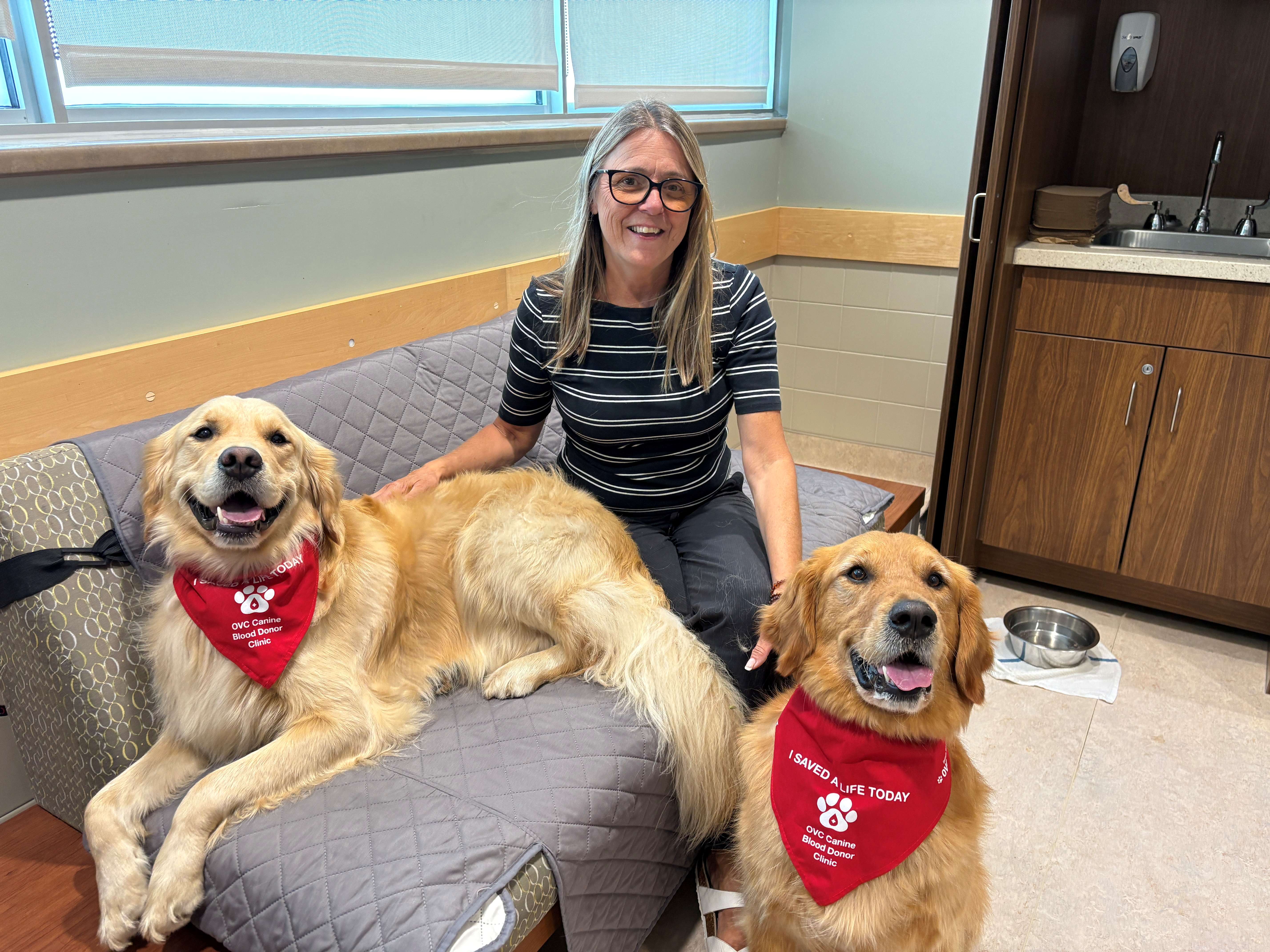
After Kaya’s passing, Colquhoun maintained a close connection to OVC, including utilizing pet grief resources available through OVC Pet Trust. When Colquhoun and her family were ready to welcome Oakley, another golden retriever, into their lives, she reached out to OVC to see how Oakley could become a donor when he was old enough. Just a few short years later, Colquhoun returned with Oakley and her daughter’s dog, Dash, to give their first blood donation.
“I felt the need to give forward somehow,” Colquhoun explains. “Coming back here with these boys is so positive and it helped me heal from losing Kaya.”
Keeping dogs safe, happy through donation
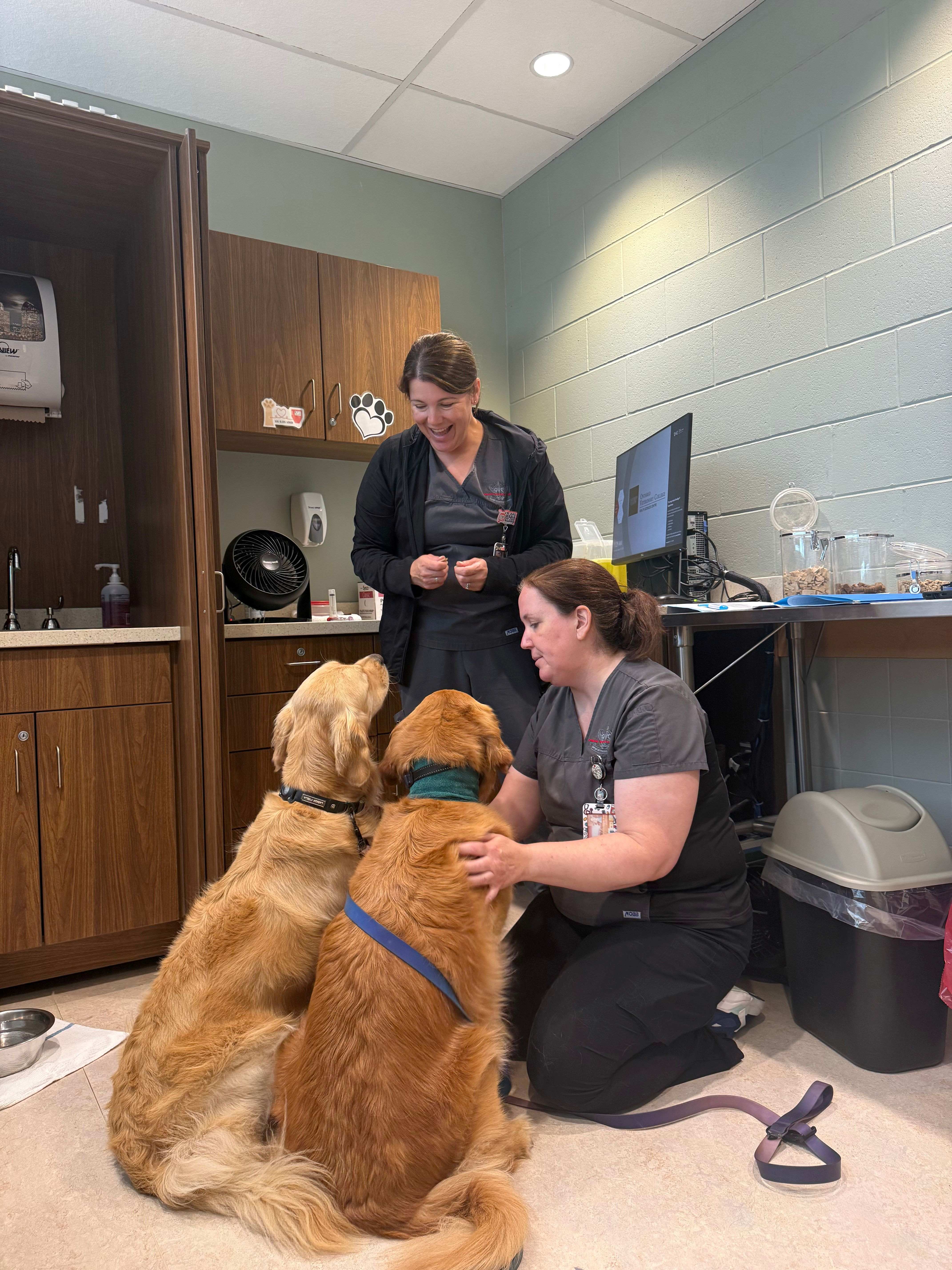
The idea of a blood donation may be intimidating, but the OVC HSC team is focused on making dogs and their owners feel safe and supported throughout the process.
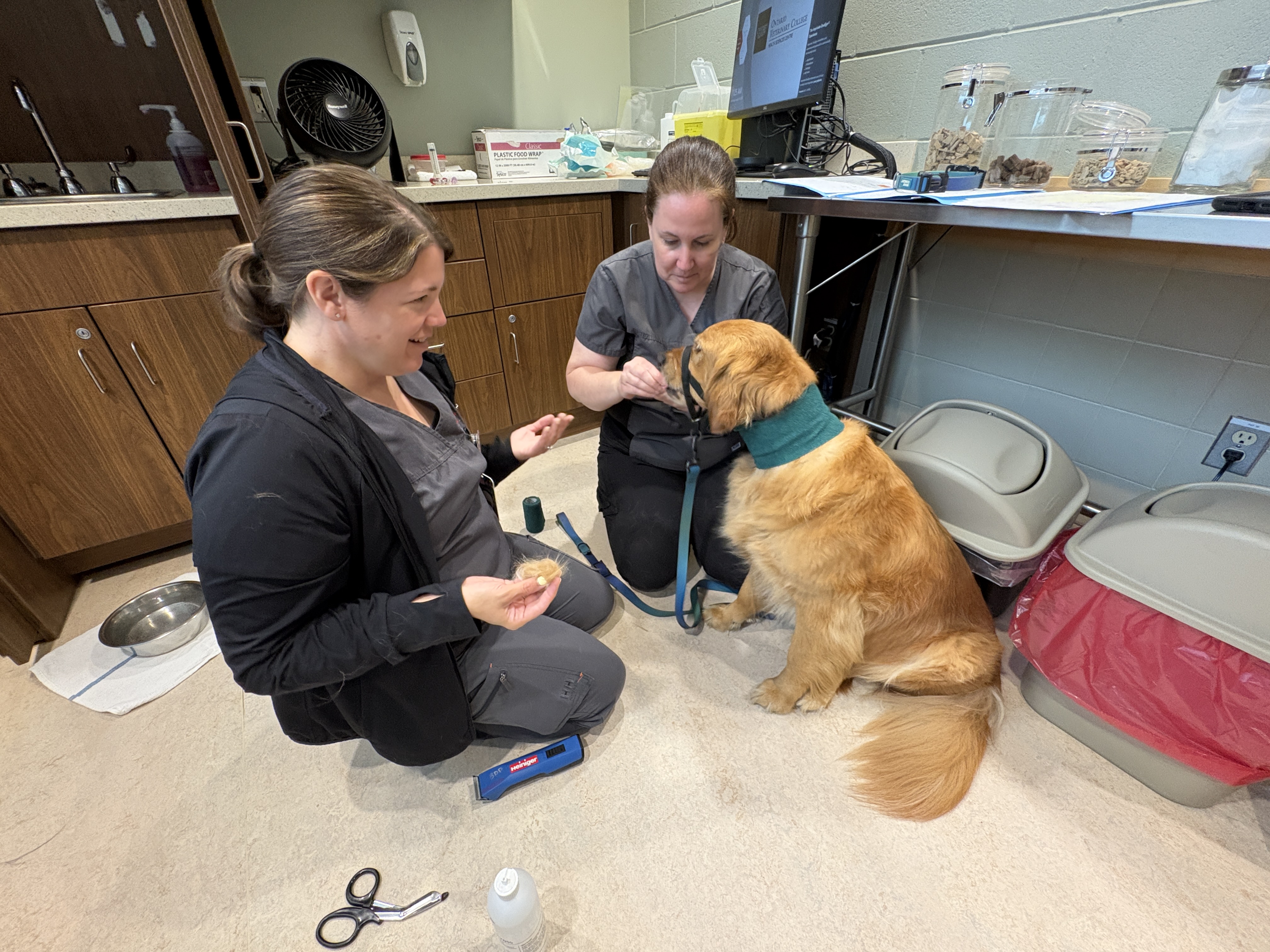
“We use a lot of food or a special toy to make the dogs feel comfortable,” explains Pamela Longworth, the registered veterinary technician who oversees the program. “From the first appointment, we want to make sure the dogs are happy to come in and give blood.”
Dash and Oakley are certainly happy to visit. Immediately upon arrival, they were excited to get into the room and receive Longworth’s attention and treats.
“I know they’re in the best care,” Colquhoun says, who gets to observe the process from start to finish in a dedicated exam room within OVC’s HSC. The space is made even more meaningful by a backdrop of hundreds of photos of current and retired blood donor dogs, creating a “hero wall” of pictures that celebrates the animals whose donations make life-saving transfusions possible.
Blois credits Longworth with helping pets and their owners feel supported throughout the process.
“She’s a consistent person there for pretty much every donation who knows the dogs, knows their personality, knows what they need, knows what the owner needs,” Blois says. “She also brings the incredible skill level that is involved in blood donation, making the process go incredibly smoothly from coming in the door all the way to actually processing into blood components.”
Improving dog blood typing, transfusions

Outside of emergency use, the blood collected is also used to advance companion animal health research.
“We often find questions we don’t have answers for in transfusion medicine,” Blois says. “When using these products on a routine basis, you start to see holes in knowledge.”
Since the blood bank is right on site at an academic institution, there are opportunities to partner with the University of Guelph’s researchers and lab facilities to work through the clinical challenges vets are facing.
“It’s great to see a problem and, in this environment, investigate that problem with people who are working in our labs and are gracious enough to help us collaborate together to begin answering these questions,” Blois says.
Right now, they’re investigating blood typing in dogs to ensure negative blood, similar to O-negative blood in humans, is being used most effectively. Specifically, they’re exploring genetic markers in “weak-positive” blood and whether that blood could be an alternative for universal donors.
“By looking at these different blood types, we can inform clinical decisions of what type of blood to use,” Blois explains. “Do we need universal donors to meet these needs or are we able to define blood types more accurately and come up with an appropriate transfusion strategy?”
Which dogs can donate blood at OVC?
To be eligible to give blood, dogs must be healthy, weigh over 25 kilograms and be between the ages of one and five. They’ll donate every two to three months until they turn seven, when they retire from the program. Longworth says there are about 70 dogs donating blood right now and they have donors already on the waitlist at the ready to start donations when needed.
In particular, Longworth says they’re always looking for breeds more likely be universal donors, including: Dobermanns, cane corso, Dogue de Bordeaux, flat-coat retrievers, greyhounds, Irish wolfhounds, German shepherds, boxers and mastiffs.
Anyone interested in learning more about the program and considering signing their pet up as a donor can learn more on the Blood Donor Program website.
The OVC Blood Donor Program is generously supported by OVC Pet Trust, Purina, Merck Animal Health and Zoetis.