
Cold storage research aims to improve chip quality, reduce reliance on imports
Everyone knows the satisfaction of biting into a beautifully crisp potato chip. But what exactly goes into ensuring the kind of quality that keeps customers coming back, bag after bag?
A lot, it turns out.
From planting crops to harvesting potatoes, to storage, processing, cooking and packaging, keeping shelves stocked with potato chips requires a dedication to quality, and the University of Guelph is playing a significant role in ensuring a year-round supply of locally sourced potatoes.
Ongoing research led by Dr. Katerina Jordan, professor in the Department of Plant Agriculture and director of the Guelph Turfgrass Institute, is focusing on finding potatoes that can withstand cold storage for longer, without compromising quality.
Improving potato storage eliminates food waste
More than 50% of the potatoes grown in Ontario are used to make chips, the snack food industry’s biggest selling product. Producers harvest these chipping potatoes from July to October for immediate processing, and the remainder are put into cold storage through the winter.
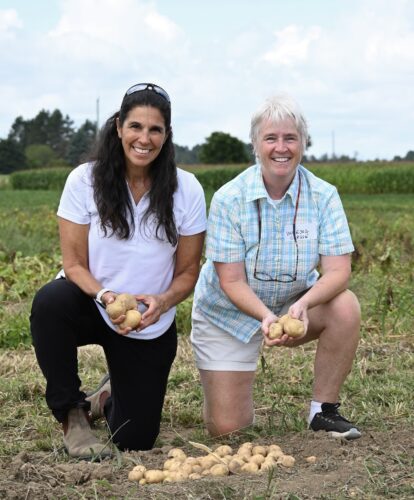
However, keeping potatoes in cold storage creates challenges. The cold prevents potatoes from sprouting, but also enables cold-induced sweetening, a process in which starch breaks down into sugar, that can make chips turn dark or cause a bitter flavour.
Cold-induced sweetening can impact up to 20% of the potato supply, which then contributes to waste, reduced revenues and increased waste disposal costs for potato producers.
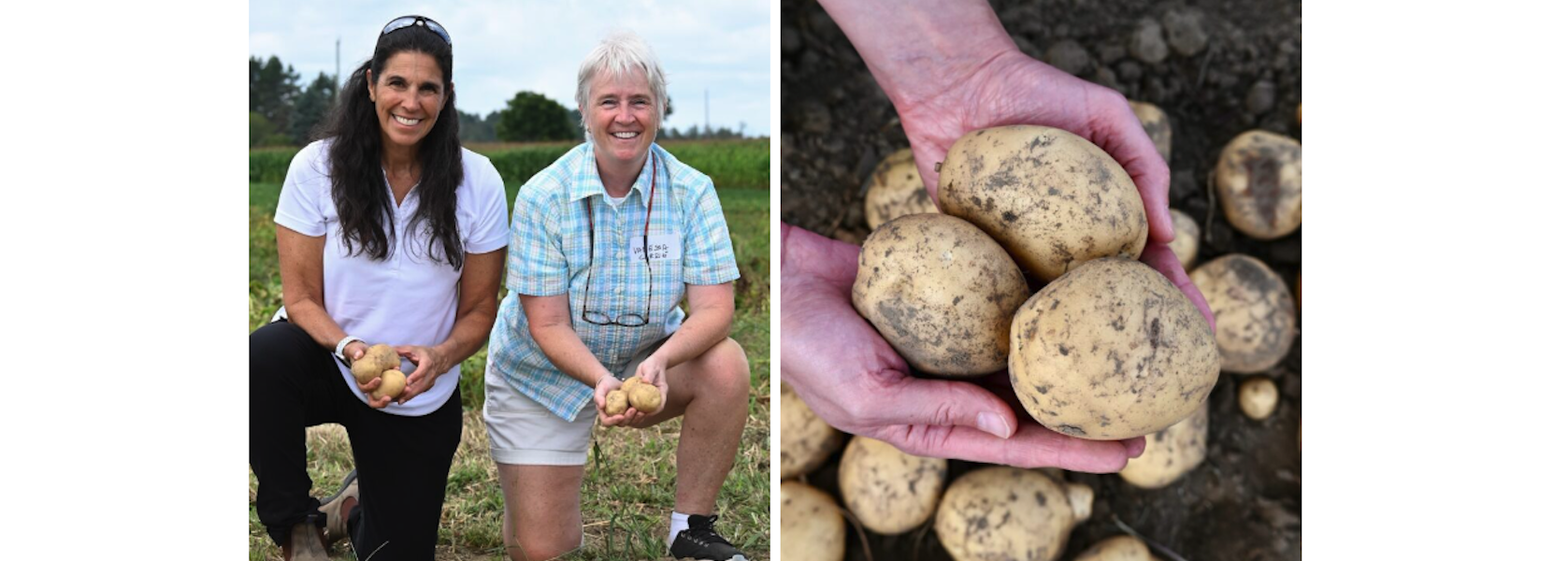
With technician Vanessa Currie at the Ontario Crops Research Centre – Elora and industry partner WD Potato, different potato varieties are being stored at various temperatures to find which are more tolerant to the cold.
Part of the research is also exploring new cooling and storage methods for new varieties. “Storage is an art and a science unto itself,” Currie explains. “A potato is a living plant, so it breathes, it respires, it has a physiology to it.”
The University of Guelph has conducted potato research for more than 70 years, helping Ontario protect its food future, advancing knowledge of potato production, quality and performance.
WD Potato is also providing sucrose and dextrose analysis. Patrick Dol, Sustainability, Quality and Food Safety Manager for the company, says the company is pleased to collaborate with the University. “Research like this helps bridge the gap between new potato varieties and the practical realities of commercial storage and processing.
“Understanding how they respond to different storage temperatures can give growers and the industry more options to maintain high chip quality throughout the storage season,” he says.
Increasing Canadian exports
If researchers can improve cold storage and prevent cold-induced sweetening, it would ensure a quality supply of potatoes year-round. A quality supply of Ontario potatoes means less reliance on imported potatoes from the U.S. and other provinces to fill that gap.
“Ideally, this could lead to producing more potatoes for Canada to export as well,” Jordan says. “We would love to see Ontario expand the types of potatoes grown here.”
When it comes to potatoes, the unique collaboration between academia and industry propels this kind of research, Jordan says.
For this project, WD Potato is providing cold storage and analysis, and Dr. Ian Tetlow’s lab at U of G is conducting analysis on invertase, the enzyme that breaks down sugar. Other supporters, such as the Ontario Potato Board, have allocated funding for researchers.
“These partnerships are mutually beneficial,” Jordan says. “Our industry partners are supportive of U of G and our research both in theory and financially. That support is integral and enabled us to expand our research programs and share knowledge.”
This research is funded by the Ontario Agri-Food Innovation Alliance, a collaboration between the Government of Ontario and the University of Guelph and takes place at the Ontario Crops Research Centre – Elora, which is owned by Agricultural Research and Innovation Ontario, an agency of the Government of Ontario.
The Alliance delivers Ontario solutions with global impact, training the next generation of agri-food innovators and delivering world-class research, innovation and laboratory services for Ontario’s $53-billion agri-food sector.