
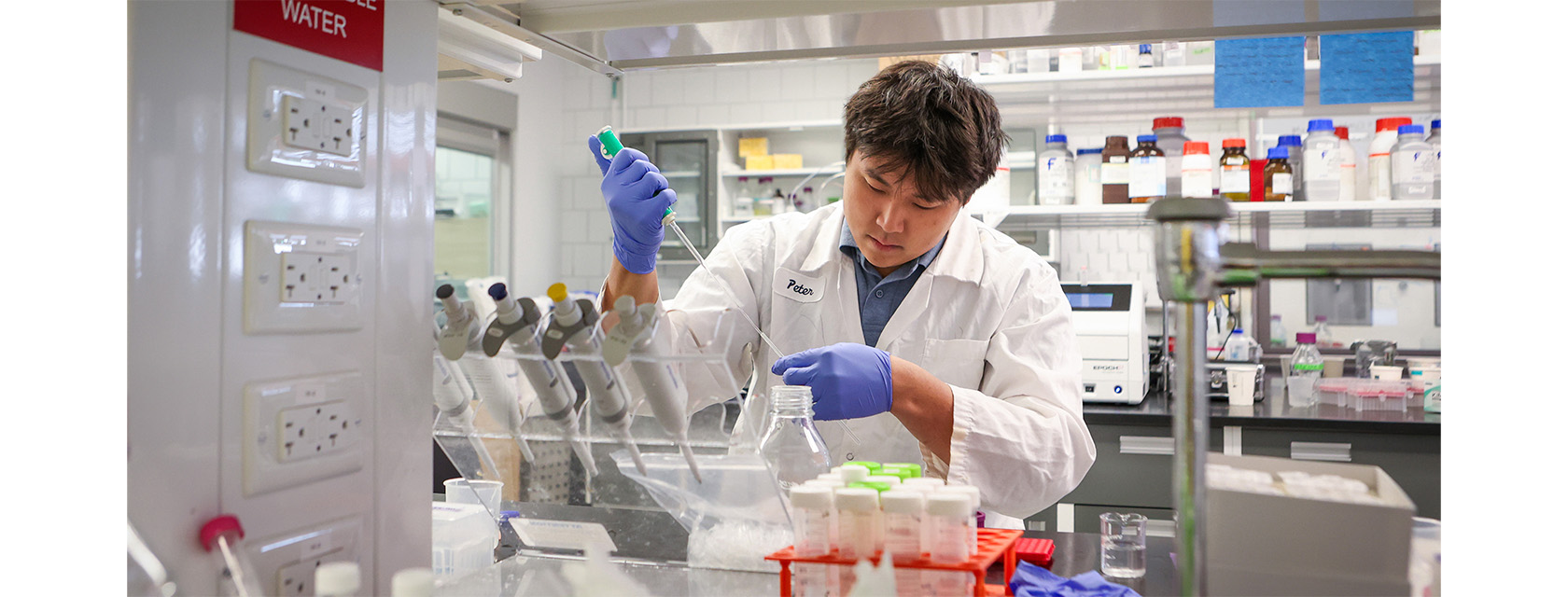
A chemistry grad’s next stop is Stanford University, but the path that led him there was shaped in the classrooms, labs and research groups at the University of Guelph.
Peter Kim’s love for science was never sparked by a single moment. Instead, it grew from the influence of teachers who made scientific discovery feel both approachable and meaningful.
“I was lucky and had great science teachers in high school,” he says. “They were very passionate about what they were teaching, and I think that passion is what inspired me to pursue the sciences.”
This fall, Kim will begin a PhD in Biochemistry at Stanford University in California, after completing a Bachelor of Science in Biomedical Toxicology (Co-op) and a Master of Science in Chemistry with a collaborative specialization in Toxicology at U of G.
Among the stories that stayed with him was that of Frederick Banting, the Canadian Nobel laureate who co-discovered insulin and sold the patent rights for just one dollar so the treatment could remain accessible. The lesson extended far beyond science itself.
Learning about researchers whose discoveries improved lives helped Kim see that scientific work could have a lasting impact outside the laboratory.
That perspective was reinforced closer to home by his older sister, Grace, a University of Guelph graduate whose own undergraduate research experiences gave him an early glimpse into academic science. Conversations about her work eventually inspired him to pursue research opportunities himself.
Building a research foundation at U of G
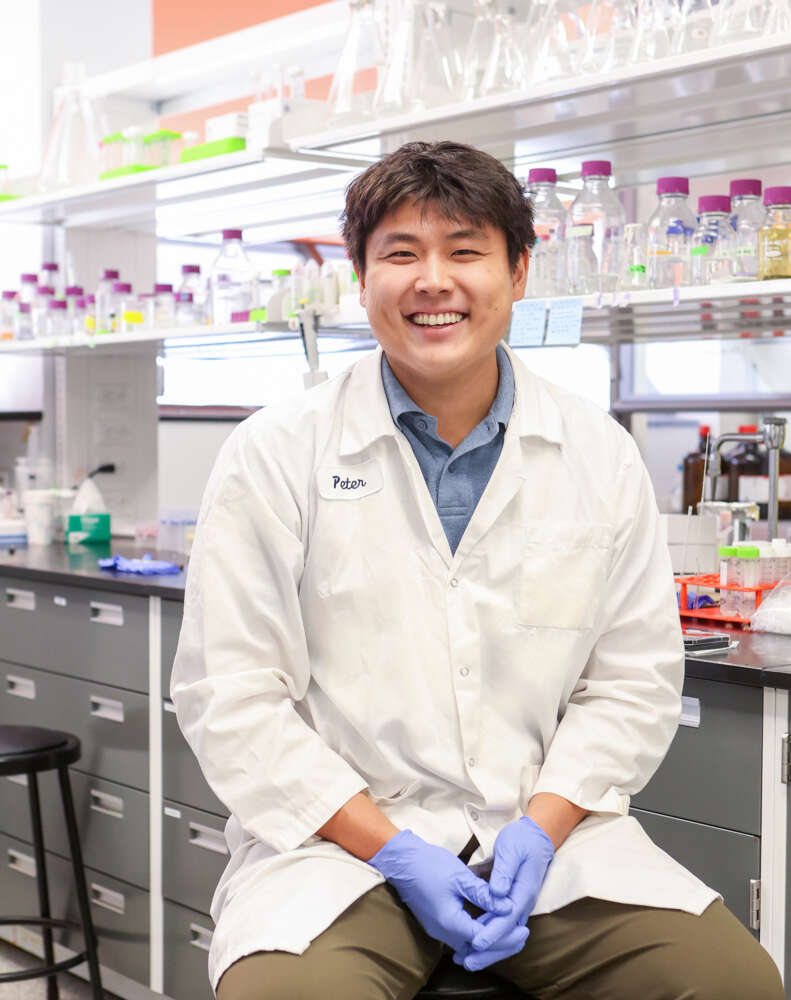
Those opportunities led him to the Department of Chemistry, where he joined the research group of Dr. Rui Huang before later becoming a co-advised graduate student working with both Huang and Dr. Derek O’Flaherty.
His master’s research focused on aptamers, specialized strands of DNA or RNA engineered to bind specific molecular targets. Working with collaborators at the University of Waterloo, Kim helped develop and characterize an aptamer designed to interact with a protein linked to cellular pathways associated with diseases including cancer and neurodegenerative disorders.
While the work sits firmly within the realm of fundamental research, Kim is motivated by what those discoveries could eventually mean for patients.
“Aptamers can be synthesized using chemistry, which makes them less expensive and highly reproducible,” he says. “If we can make these molecules cheaper, then we can make treatments more accessible.”
That possibility changed the way he thought about research.
“Typically, you feel far removed from any real change in the world,” he says. “But it’s hard to keep pushing through failed experiments, optimizing protocols and staying late to analyze data if you don’t believe your work matters.”
Mentorship that shaped a scientist
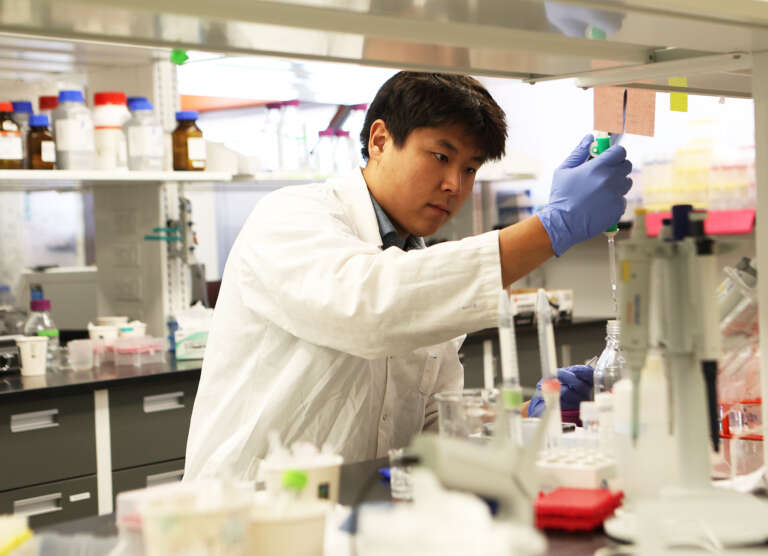
When he joined Huang’s lab as an undergraduate researcher, she introduced him to the world of structural biology and nuclear magnetic resonance spectroscopy. Through her mentorship, Kim developed the technical expertise and scientific curiosity that would help shape the rest of his research career.
“She builds you into a scientist who is not only rigorous but also curious,” he says.
O’Flaherty offered a different but equally influential perspective. Kim recalls hearing him describe a complex synthesis pathway as “beautiful,” an approach that encouraged him to appreciate not only scientific results but also the creativity and persistence required to achieve them.
Outside the laboratory, Kim says the graduate student community became one of the most rewarding parts of his experience at U of G.
The students in the Huang and O’Flaherty research groups became close friends, balancing long days in the lab with camaraderie, discussion and shared goals. “We’re an incredibly productive group, but we also know how to have fun,” he says.
“Good science is built not just on hard work and discipline, but also on the friendships and sense of community that make that work worthwhile.”
Peter Kim
Preparing for the next chapter
Kim also points to U of G’s co-op program, laboratory coursework and hands-on research opportunities as important foundations for his future success. “The hands-on lab courses are where you get skills that make you hireable after graduation,” he says.
As he prepares for Stanford, he describes leaving Guelph as bittersweet.
“I love both the school and the city,” he says. “But I’m incredibly excited for the opportunity to learn and work alongside some of the brightest minds in science.”
In terms of advice for future researchers, Kim recalls hearing renowned scientist Dr. Lewis E. Kay tell students that if more than 10 per cent of their experiments succeed, they probably are not working on problems that are challenging enough.
Whether applying for scholarships, research positions or graduate programs, Kim has often pursued opportunities he was not certain he would get.
“It’s not because I lack confidence,” he says. “It’s because I know that if I only pursue the options I’m guaranteed to receive, I’ll never discover what I am truly capable of achieving.”
If there’s one lesson he hopes students take away, it’s this:
“Don’t count yourself out before someone else has the chance to say yes.”