

It was a fleeting glimpse but what caught Allegra Love’s eye gave her pause. Could it be?
Part of a research team measuring the health of a woodland caribou herd on Fogo Island in Newfoundland, the University of Guelph PhD student peered through binoculars and spotted something peculiar in the trees – a pregnant caribou donning velvety antlers in the early spring.
“At first, I second guessed myself,” she says.
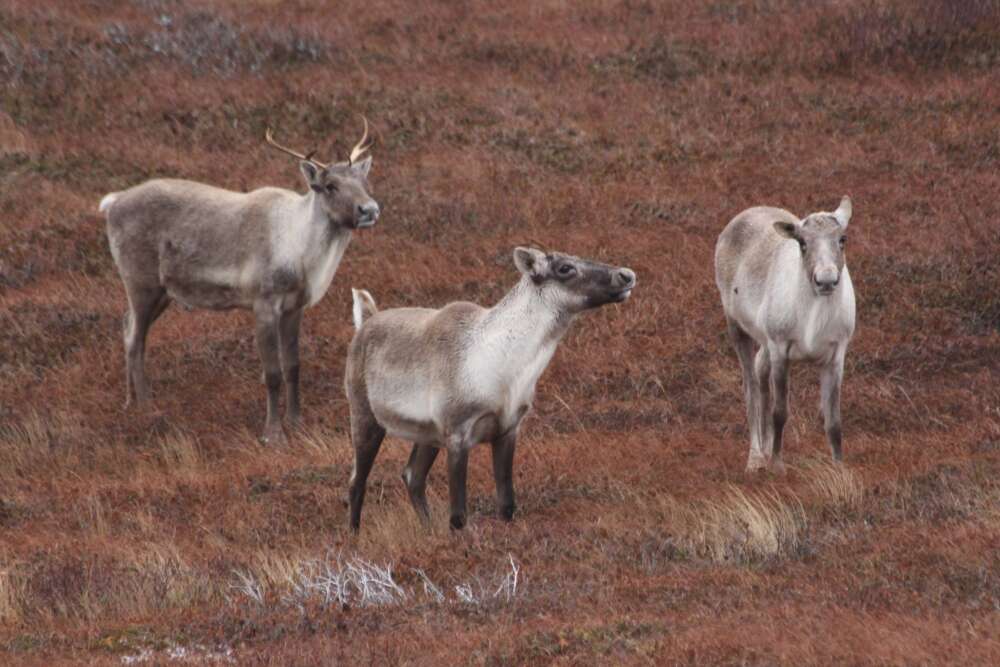
Caribou, sometimes referred to as reindeer, are the only species of deer (including white-tailed deer, elk and moose) whose females grow antlers; their growth patterns have been tied to reproduction. Growth typically occurs in the summer but, this was May of 2024, and Love had an inkling that something unique was afoot.
“We’ve been tracking this population on Fogo Island since 2016,” she explains. “We’ve never seen female caribou growing antlers on this timeframe.”
A mysterious disruption in a natural cycle
The team would soon learn the caribou Love spotted was not an anomaly, but a population-wide change in the adult female caribou they observed over a two-week period that year and again in 2025.
This suggested to researchers that this caribou – with antlers approximately three to five weeks into development – was growing antlers at least two months earlier than previously observed.
“That is what makes our study novel,” Love says, of the paper published in Ecosphere. “To the best of our knowledge, this kind of change in phenology has not been previously observed across an entire population.”
Phenology is the study of the timing of recurrent biological events in plants and animals.
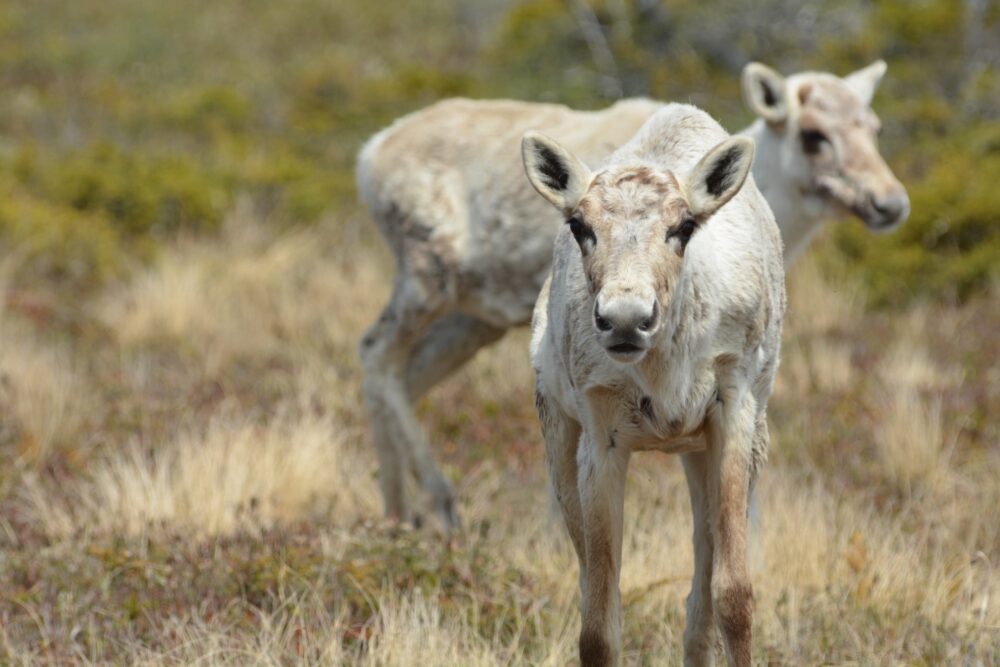
For female caribou, antler growth phenology is linked to parturition (giving birth). Non-pregnant caribou do grow antlers, but typically it occurs earlier in the season, whereas pregnant caribou tend to grow antlers later in the season, shedding them two to three days after giving birth.
Caribou are thought to have consistent, synchronous patterns of antler casting and growth within a population. So, what was causing this disruption in the cycle?
Caribou, the most northern deer species, are an Arctic mammal. Females grow antlers to compete for craters – holes they dig to gain access to vegetation buried under snow – and the number of females that grow antlers often corresponds to the depth of snow.
Warmer average temperatures on Fogo Island from January to April 2024 may have triggered hormonal pathways associated with antler loss, earlier than usual.
Temperature changes also decreased snow cover earlier than other years, driving shifts in the quality or availability of vegetation, potentially changing the caribou’s nutrient or energy reserves, and therefore affecting antler growth. Late spring to early summer is an important foraging time for caribou, who lose approximately 30% of lean body mass over the winter.
Female caribou understudied
Since caribou are the only deer species in which females grow antlers, Love says, they tend to be understudied. Prior research of the Fogo Island herd determined that in late May or early June of any given year, approximately 20% of female caribou have mature antlers.
On Fogo Island, none of the caribou were observed to have mature antlers in 2024 and 2025.
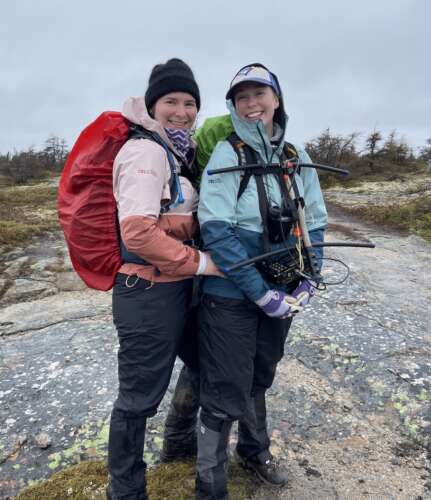
“In our system on Fogo Island specifically, we’re interrogating this from an ecosystem lens,” says Love, whose research focus is movement ecology and disease ecology. “The depth of knowledge that we have about the landscape on Fogo Island makes it such a great opportunity for a graduate student like me to write and learn and become more connected to the field systems we were studying.”
Love worked with a larger team of researchers led by Dr. Quinn Webber, behavioural ecologist in the Department of Integrative Biology, that included colleagues from Memorial University in St. John’s, NL, and the Moffitt Cancer Center in Tampa, Florida.
This unusual shift the team discovered in the female caribou on Fogo Island over two consecutive years provides evidence that antler phenology is not consistent across the species and can in fact, be affected by environmental change.
“Antler phenology and growth is highly variable in caribou and reindeer populations,” says Webber, senior author on the study.
In some populations, nearly 100% of animals grow antlers, but in others it’s much lower, he says. “One thing we know is consistent is that if an individual caribou grows antlers in one year, they are almost guaranteed to grow antlers in subsequent years.”
Researchers suggest further observation as climate patterns evolve rapidly year over year, impacting antler presence, size and timing as well as reproduction.
“For an already vulnerable species, such subtle disruptions to timing may tip the balance between resilience and collapse,” Love says.