
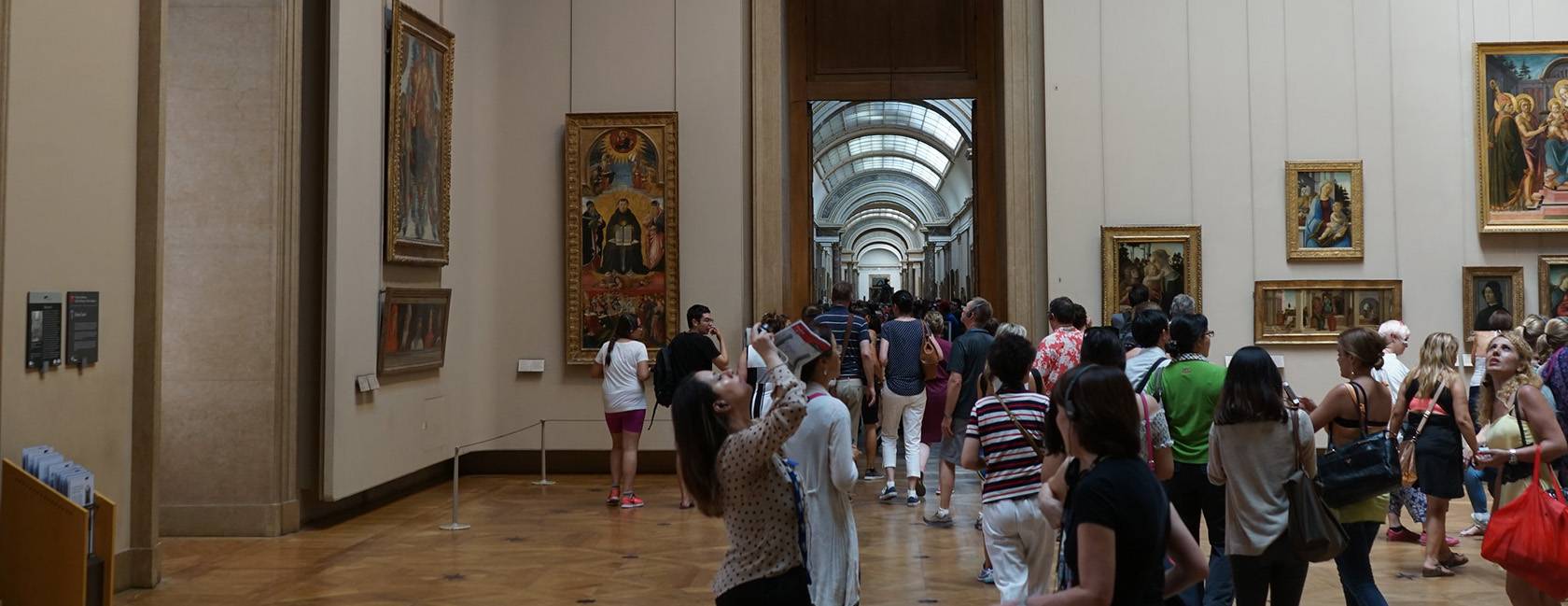
The Louvre museum heist has captured the world’s imagination for its brazen simplicity. But the daytime robbery might reveal an “eroding” social contract that tighter security can’t fix, says a University of Guelph art history professor.
“The Louvre theft reminds us that a certain amount of museum security is performative,” says Dr. Sally Hickson, professor in the College of Arts. “Most security is at the front entrance – it’s a bit of a show. Virtually all the other entrances and exits are not guarded. In a very large and complicated building, one guard might invigilate several rooms.”

“How often have you wandered down a back staircase in a museum and never encountered anyone?”
Hickson studies Renaissance visual and material culture, exploring women and friendship networks during this period as well as in early 20th-century Canadian art. She also leads the Art Crime in History course in U of G’s Art History program.
“We know the Louvre windows were not looped into their alarm system,” she continues. “The older the building, the more difficulties there are with security infrastructure.”
That fair amount of laxity, she says, happens as large museums still rely on an unspoken social contract among guests.
“This social contract dictates that visitors will respect the rules of engagement, and that has eroded in recent years,” she says. “In search of selfies, visitors regularly get too close to the art, bumping pedestals or the works themselves, occasionally causing irreversible damage.”
A broken social contract, with meagre security culminated in the baffling daytime robbery.
But why steal jewelry?
Hickson says that the jewels were likely selected for their small size and weight, perfect for a quick getaway.
She draws parallels between the Louvre heist and the famous Brink’s-Mat robbery of 1983, in which $26 million of gold was taken from storage warehouses. The thieves worked with jewelers who melted down the gold bars, transforming them into other pieces that could be sold without arousing suspicion.
“It’s likely that the jewelry stolen from the Louvre serves as collateral in some criminal enterprise,” she says, “in a drug trade, weapons trade or some other exchange in which one party wants a guarantee against some kind of loan.”
Hickson says if the thieves want money, they need a plan: “Access to a jeweller who knows how to remove the stones and who has connections to buyers willing to take a risk on highly recognizable stones – recognizable for their size, the way they’re cut and faceted. The stones could be recut and sold again, each transaction generating more money.”
As for preventing the next heist, increasing security might not be the complete answer, Hickson says, as this might alienate or exclude guests.
“The Just Stop Oil vandalism created public backlash about increasing museum security, but there’s also a danger of that being used to curb public access to museums themselves.”
“Museums and other cultural venues are arenas of public trust, and we all share responsibility for keeping them safe.”
Hickson is available for interviews.
Contact:
Dr. Sally Hickson
shickson@uoguelph.ca