
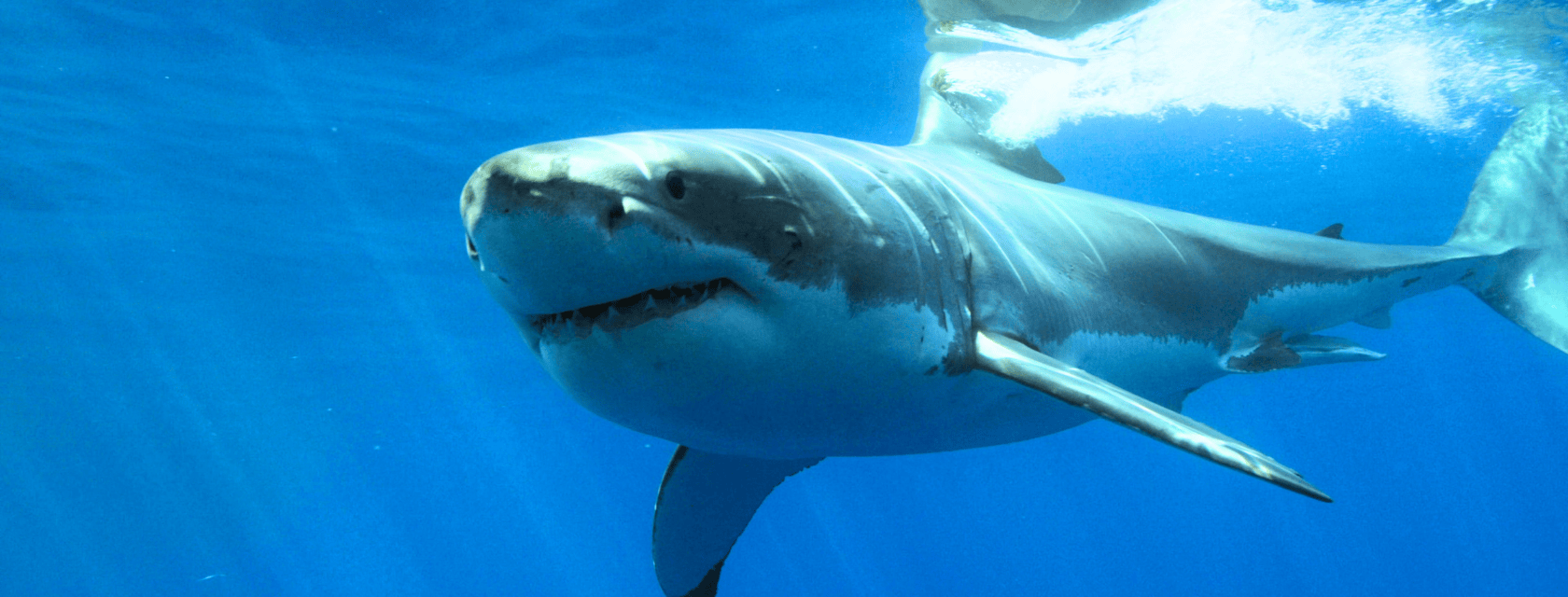
Catching great white sharks during courtship and mating has long been considered by some as the “holy grail” of white shark ecological research.
Dr. Stephen Crawford, an integrative biology professor at the University of Guelph, is working with Atlantic Canada community members to actively search for this extraordinary event.
If observed and recorded, it will not only be a first for the Northwestern Atlantic white shark population, but also for any of the other global populations.
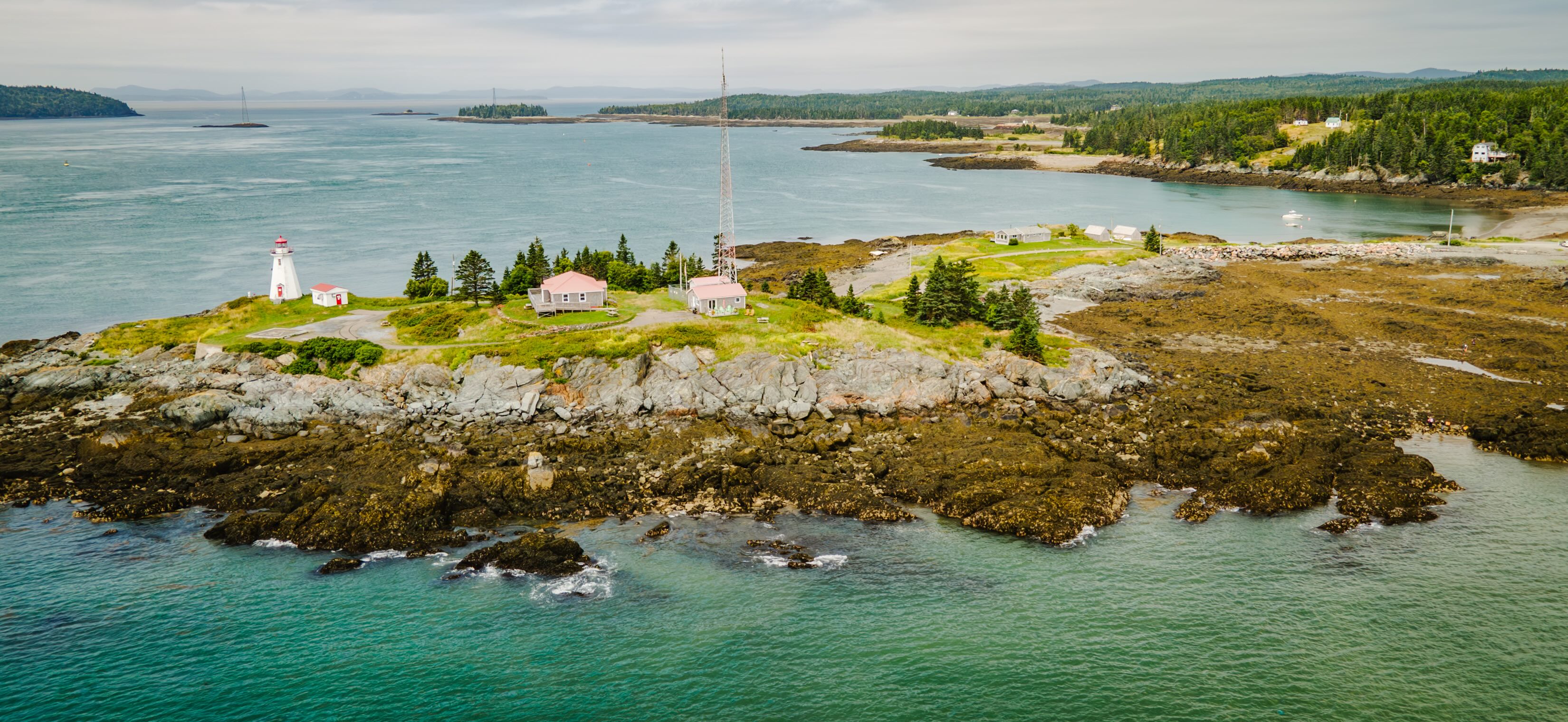
Following a hypothesis generated by Indigenous and local knowledge holders, past and present – that great white sharks may be mating in Passamaquoddy Bay, N.B. – Crawford will join members of the Peskotomuhkati Nation and local communities on both sides of the Canada-U.S. border in the first-ever “Passamaquoddy Bay White Shark Week.”
“This is not simply ‘citizen science’ in which people just collect data at researchers’ request and design; it’s Indigenous and local communities, who are already very savvy and know the place they live very well, working with scientists to do science together, from start to finish,” Crawford says.
“One community-based hypothesis, generating a set of specific predictions that can be tested through the deployment of volunteer observers in different regions of the bay, throughout the survey week. All homegrown.”
Unique project began from Indigenous, local knowledge
From July 18 to 25, a team of volunteers operating boats and drones will monitor known or suspected white shark hotspots in Passamaquoddy Bay, recording presence and absence, estimated size and behaviour of the animals – especially the massive 18+ foot (5.5+ metre) potential breeders that are known to seasonally migrate to those waters, in a unique project that has never been attempted before.
Community members suggested that Crawford coordinate the event after he learned that several people there had observed a range of behaviours consistent with courtship, including the unexplored possibility of male mating territoriality.
With two notable local knowledge exceptions, both in New Zealand, “nobody has ever documented mating by white sharks anywhere in their nine different populations globally,” Crawford says. “Based on the available evidence from Indigenous and local knowledge systems, we have a decent chance of finding and recording something special in Passamaquoddy Bay.”
The community members recognized the rare opportunity to create their own non-sensationalized Shark Week and make scientific history, celebrating local and Indigenous collaboration with researchers in the process.
Broader shark research program seeks to ‘change understanding of the species globally’
The event is just one part of Crawford’s larger Northwestern Atlantic white shark research program that wraps up in 2026.
Conducting more than 200 interviews with Indigenous and local communities from Florida to Quebec across several years, Crawford is seeking the kind of grounded ecological knowledge that has typically been undervalued by the science knowledge system.
“For example, we already possess clear archaeological evidence that pre-contact Indigenous cultures from Maryland to Quebec have had special relationships with white sharks that date back to time immemorial,” he says, “including the ceremonial placement of white shark and fossilized megalodon teeth in ritual and mortuary contexts – a practice that mysteriously ended with European colonization. Atlantic Indigenous cultures have known these white sharks for a very long time.”
Speaking to knowledge holders in Northwestern Atlantic communities across Canada and the U.S., Crawford says the project is gathering important new observations and developing hypotheses never considered by science, dramatically expanding our understanding of white shark ecology.
“In some major ways, this knowledge system approach will definitely change our understanding of the species globally.”
By engaging with Indigenous and Local knowledge holders through rigorous natural- and social-science methodologies, Crawford hopes he can craft meaningful recommendations on how future generations of ecologists could pursue this kind of knowledge system research.
“Many scientists who use the word ‘anecdotal’ tend to do so with a very condescending attitude,” he says. “But what those scientists don’t understand is that ‘anecdotal’ simply means ‘undocumented.’
“That’s why goal number one in this research is proper documentation and analysis, so that we can take what is shared by Indigenous and local knowledge holders and translate into explicit cause-effect hypotheses published in the peer-reviewed literature – so those scientists can start incorporating these ideas into their own thinking and research.”