

Inspired by his own student experience, University of Guelph grad Vedant Vyas built an AI learning platform that eventually culminated in an acquisition
The College of Computational, Mathematical, and Physical Sciences builds graduates who use technology and innovation to solve real-world challenges. One of them is Vedant Vyas, a recent software engineering graduate who transformed a student-focused idea into a fast-growing startup that attracted thousands of users, earned acceptance into one of the world’s leading startup accelerators and was ultimately acquired.
Before he even graduated, Vyas co-founded Opennote, an AI-powered learning platform designed to help students engage with course material in ways that align with their individual learning styles. Built by students for students, the platform transforms existing course content into personalized learning experiences, helping users better understand concepts and prepare for assessments.
What began as a project inspired by Vyas’s own experiences at the University of Guelph soon grew beyond the classroom. In just a short period of time, Opennote gained thousands of users, secured investment, joined Y Combinator and eventually became part of Reducto. Today, Vyas and the Reducto team continue building technology that helps organizations unlock value from complex information and data.
His journey demonstrates what can happen when technical skills, curiosity and entrepreneurship come together around a problem worth solving.
Building with entrepreneurship in mind
Long before launching a startup, Vyas was interested in both technology and business. “I grew up fascinated by technology and ways I could leverage it to build something of my own,” he says.
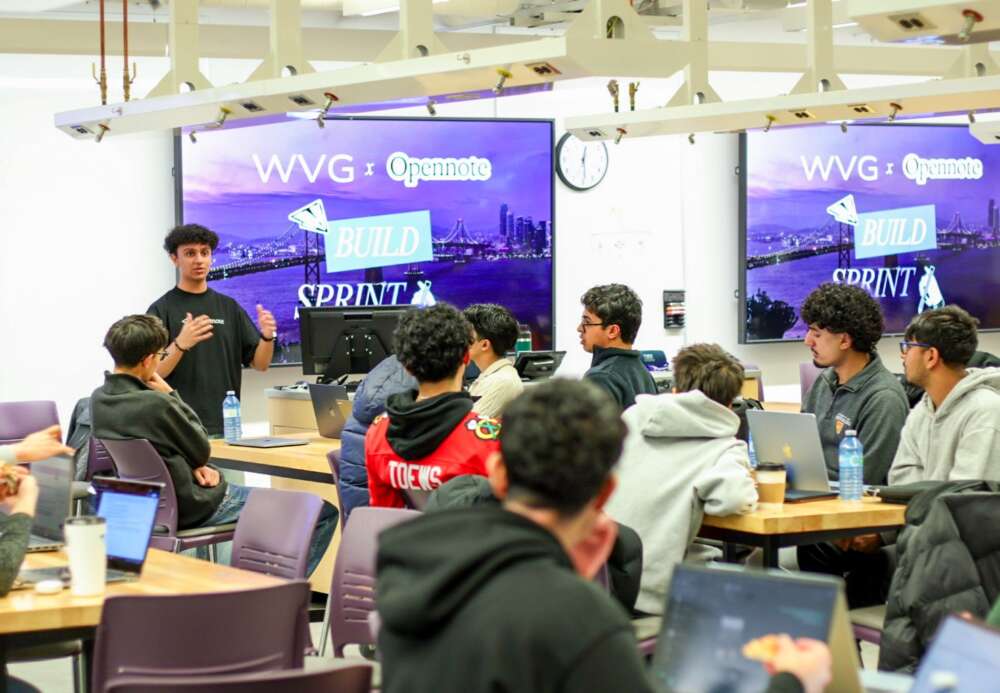
That interest eventually led him to Software Engineering at the University of Guelph. Although he had only taken a handful of introductory computer science courses before university, he recognized that software development could become a powerful tool for turning ideas into reality.
The practical nature of the program was a major draw. “I decided to go into software engineering because I wanted a larger focus on practical applications as opposed to theory,” he says.
“I figured if I had enough chances to build something in my classes and present and share it with others, I’d be more inclined to take these projects further outside of the classroom.”
Vyas also made a point of making the most of campus life. He participated in the Guelph Student Investment Council, stayed active, enjoyed life on campus and connected with students from a wide range of backgrounds and disciplines. Those experiences helped reinforce something he already suspected: some of the best ideas emerge when different perspectives, skills and interests come together.
Learning beyond the classroom
While entrepreneurship often involves uncertainty, Vyas credits many of the experiences he had at U of G with helping prepare him for the journey.
A first-year seminar course gave him the opportunity to build and present an app concept to judges and athletes.
“It was my first taste of building something I thought I could take beyond my classes,” he says.
Software design courses throughout the program also proved valuable. Learning how to build prototypes, map user journeys and think critically about product development became skills he would later rely on every day as a founder.
Several mentors played an important role as well. Vyas credits Dr. Ritu Chaturvedi‘s programming courses with helping him develop the technical foundation that would later support his work as an entrepreneur.
“They were probably the first computer science classes I took where I felt I was actually learning something and consistently able to apply it both in an academic and professional setting,” he says.
He also credits Dr. Tyler Zemlak at U of G’s Research Innovation Office with making introductions and helping him connect with people across campus during Opennote’s early stages.
Those experiences reinforced a lesson that would become central to his entrepreneurial journey: building great technology rarely happens in isolation. It is strengthened by community and mentorshikp.
From student project to startup success
When Opennote launched in early 2025, the team expected to learn from a small group of early adopters. That learning happened much faster than anticipated.
“We had a small user cohort of a few hundred users which very quickly became thousands within our first week of going live,” Vyas says.
The rapid growth brought excitement, but also new challenges. Infrastructure needed to scale, user feedback arrived constantly, and product decisions carried greater weight as adoption accelerated. What had begun as a student project was quickly becoming a company. “Building and fundraising took up almost every hour of every day,” he says.
Balancing startup growth with coursework was not always easy. Product development, customer conversations, university commitments and day-to-day operations all competed for attention. At the same time, Vyas found himself in a unique position: helping build a platform he was actively using as a student.
“I remember using the initial minimal viable product (MVP) of Opennote to help stay on top of my classes while validating what we were building.”
As momentum grew, Opennote reached a major milestone when it was accepted into Y Combinator, the Silicon Valley accelerator known for helping early-stage startups scale. The company also secured investment from prominent backers who shared the team’s vision for more personalized learning through artificial intelligence.
“Beyond the funding, the biggest value was being surrounded by other founders building through the same challenges and forming relationships that continued well beyond the batch,” says Vyas.
Each milestone reinforced what the team had discovered from the beginning: a problem identified by students could resonate far beyond the classroom.
Today, Vyas and his co-founders continue to apply the same principles that shaped the company’s growth: listening closely to users, solving meaningful problems and continually improving the product.
Advice for future student entrepreneurs
For students considering a project or venture of their own, Vyas offers a simple starting point: “Start building.”
He believes there has never been a better time for students to experiment, create and test ideas. Modern AI tools have lowered barriers to entry, making it possible to build and validate solutions faster than ever before.
But technology alone is not enough. According to Vyas, the most important insights come from the people you’re building for.
“It’s always easier to validate something when you’re closely communicating with who you’re building for and always iterating to improve,” he says.
For CCMPS students, his story is a reminder that innovation does not always start with a fully formed business plan or breakthrough technology. Sometimes it begins with a problem, a question and the decision to start building.