
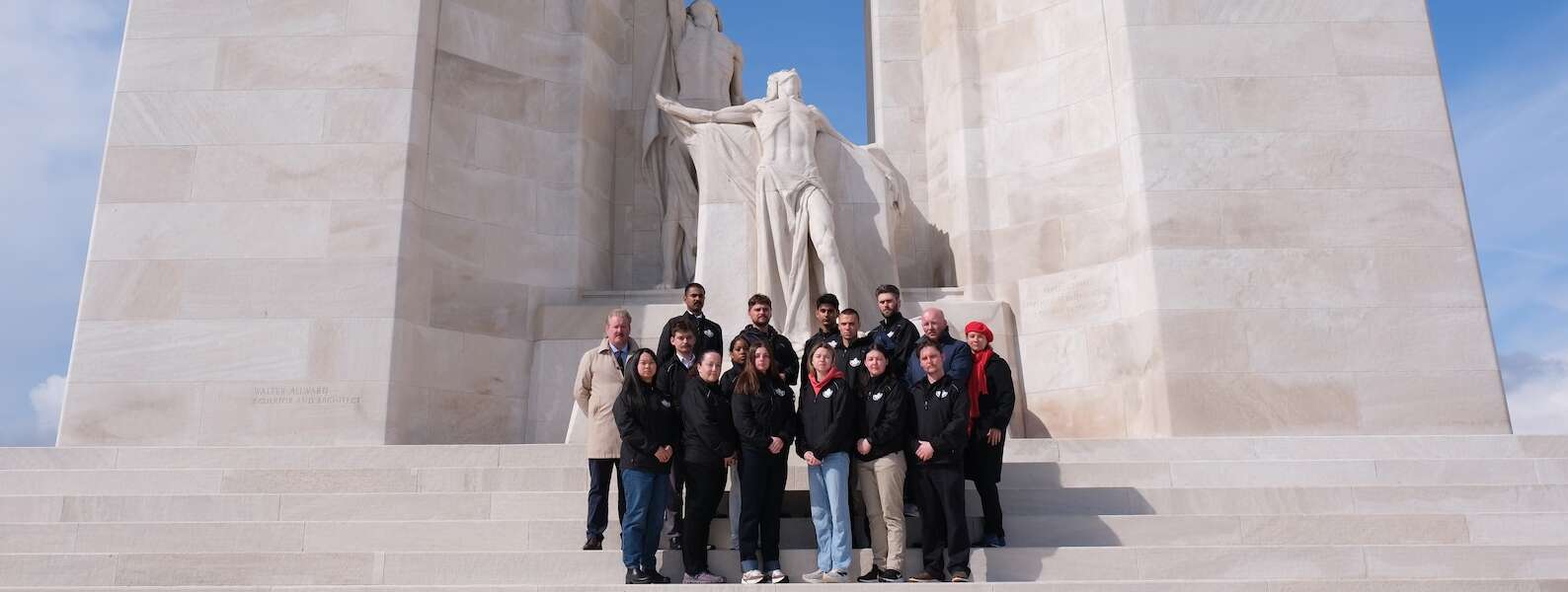
Through Serving Scholars, legacy of students who lost their lives in WWI to be preserved
One hundred and nine men left their homes in Canada, where they were studying at the University of Guelph, to fight in the First World War, and while their names have been enshrined on plaques inside War Memorial Hall, their stories are lesser known.
Zane Ward is on a mission to change that.
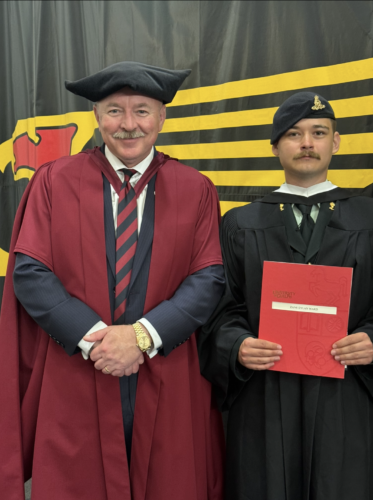
As a member of Serving Scholars – a unique initiative developed at U of G to support active Canadian Armed Forces members balance school with military service – Master Bombardier Ward wanted to find a way to honour these fallen soldiers whose stories he had long wondered about.
Now a master’s student in European Studies, Ward started what would become known as Project Reunion as an undergrad in the Department of History. His goal was to document the lives and sacrifices of the men whose lives ended in battle overseas and to connect living soldiers with their predecessors.
He started with the OAC Review, a student magazine published from 1889 until 1961, before searching through The Commonwealth War Graves Commission and records from Veteran Affairs Canada.
“There were little tidbits of information, sometimes a few photos,” he says. “Cross-referencing stories could be challenging at times, and some information was unable to be verified.”
Ward used his archival research skills to embark on a genealogical investigation to construct biographies of each soldier, assisted by fellow members of Serving Scholars and Dr. John Walsh, co-founder and director of the program.
“Zane’s dedication to this undertaking has been exceptional,” says Walsh, associate professor in the School of Languages and Literatures and Director of Defence Industrial Strategy at U of G. “The courage, determination, discipline and devotion reflected in our Serving Scholars are a reminder that service to Canada is not merely a chapter in history books. It is a living tradition.”
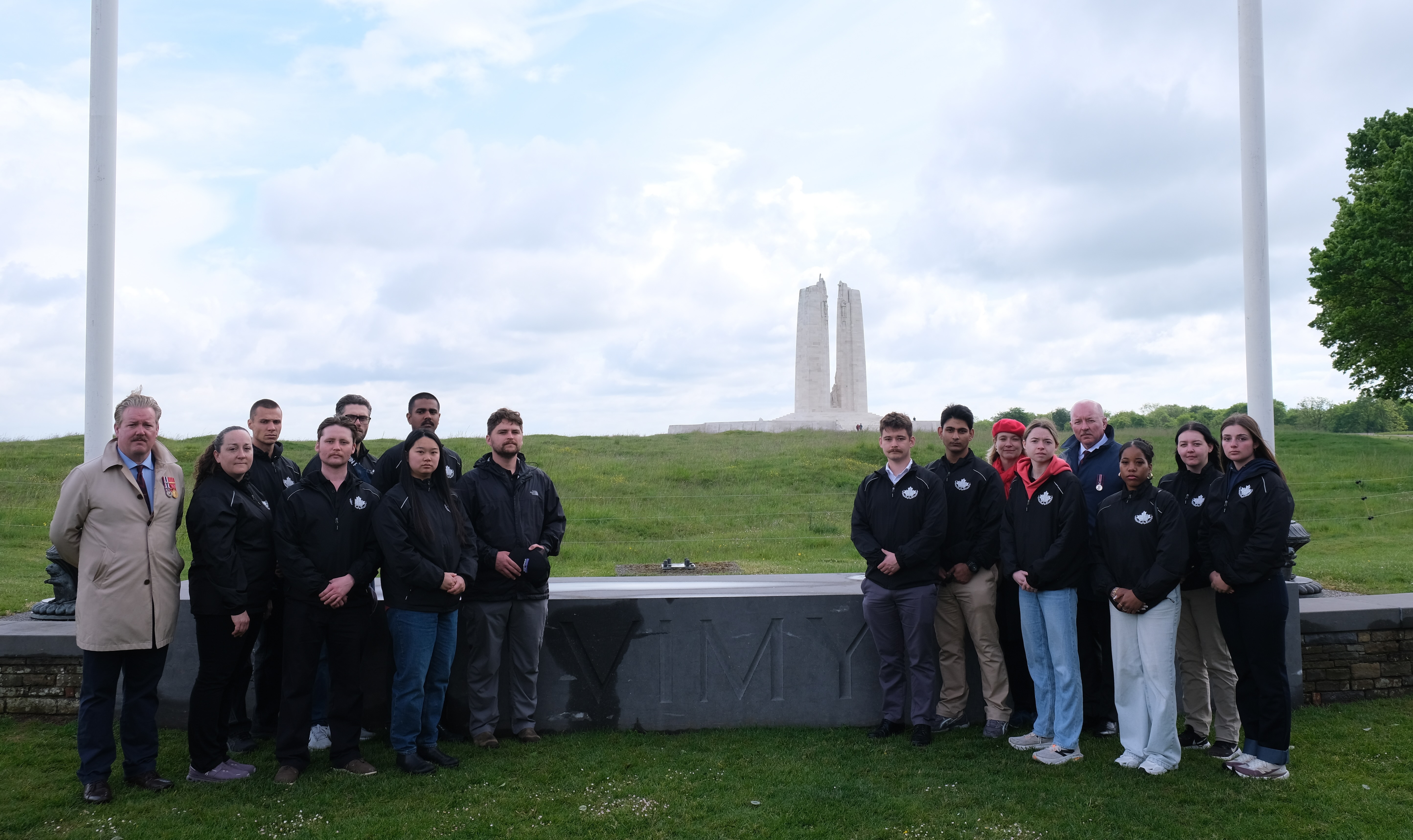
Emotional journey to WWI battle sites in Europe
This past spring, Ward and 15 other Serving Scholars travelled to the U.K., France and Flanders Fields in Belgium to visit the resting places of the 109 men. They were joined by alumni and CAF members, as well as Walsh and the program’s other co-founder, Lieutenant Darren Sargent.
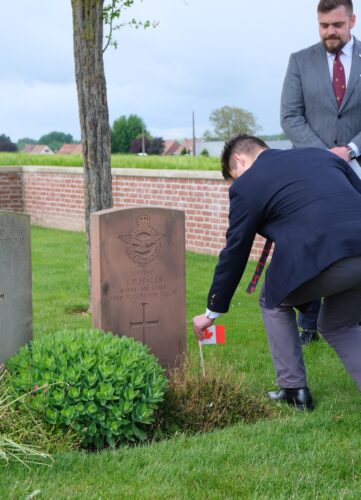
Having spent so long researching their stories, Ward says he developed a real connection with each soldier. Standing at their gravesites was an extremely emotional experience he is grateful for.
“There is something almost overwhelming about standing beside the grave of a young man whose life you have researched, reading his story aloud, and placing a Canadian flag and a poppy upon the ground where he rests,” says Walsh. “A century of history collapses into a single human encounter.”
The group had plans to clean the gravesites and lay Canadian flags to honour the soldiers. What Ward did not expect was to hear stories from locals, including some of the groundskeepers of the cemeteries who explained how the subsequent battles of the Second World War required some soldiers to be moved and reburied.
“To have battle continue in your resting place long after you’re gone is terrible,” Ward says. There was also an incredibly coincidental meeting with fellow Canadians who had travelled to the same place to visit a loved one and were impressed to hear about Project Reunion. “A commonality among everyone we talked to about the project was that they were saddened at these lost stories,” Ward says.
To date, Project Reunion has been able to secure information for 93 of the 109 men. Even at War Memorial Hall, some of the plaques offer just a first initial and a last name. Only some list their rank. The project remains open to connecting with living relatives to continue to gather information.
Prime Minister expresses gratitude for Project Reunion
As Ward stood and gazed out at rows upon rows of indistinguishable graves, he began thinking about a monument to memorialize the 109 men and remind visitors of their sacrifices and their connection to U of G.
Ward and Walsh are co-authoring a book on the stories contained in Project Reunion and have begun conversations with the Belgian ambassador about the erection of the monument. The pair are also advocating to have posthumous degrees awarded to the 109; the University of Toronto originally claimed them as its fallen because the University of Guelph was not officially created until 1964, when its founding colleges amalgamated.
“If a university considers these young people worthy of having their names carved in stone, then surely it owes them the effort of discovering who they were, where they fell, and where they rest,” Walsh says. “The 109 were ours, and a century later, they remain ours.”
These men were students and members of the U of G community with ambitions, families, friendships, and lives they expected to live.
“It feels like a very fitting tribute to these men, making their sacrifices relevant in a modern context,” Ward says. “My hope is that we make the next generation more aware of the value of finding information in places other than online to understand history. It was truly a priceless experience to be there in real life.”
Project Reunion received funding support from the University of Guelph, the Ontario Agricultural College and the Sussman Family Foundation. The federal and provincial governments have also extended their support, including a letter from Prime Minister Mark Carney expressing admiration and gratitude.
On Nov. 11, students from the Ontario Agricultural College will create a Walk of Remembrance, lining the route from Branion Plaza to War Memorial Hall with poppies. A ceremony is planned for 10:30 a.m., with a community procession to lay wreaths at War Memorial Hall, a moment of silence, formal remarks and music by the Gryphon Singers. All are welcome to attend.