
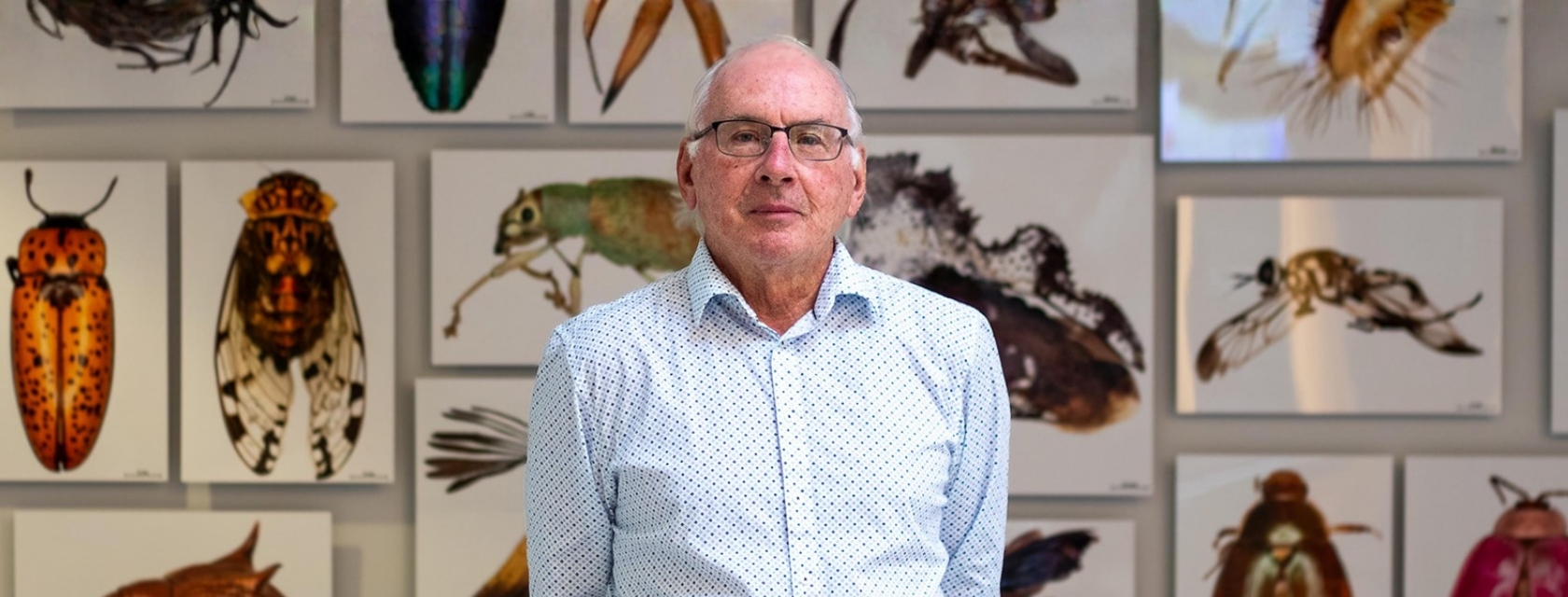
An evolutionary biologist at the University of Guelph is leading efforts to safeguard global biodiversity, backed by a significant investment in research infrastructure from the Canada Foundation for Innovation.
Dr. Paul Hebert, professor in the Department of Integrative Biology, College of Biological Science and founder of DNA barcoding, has received $9,208,765 from the CFI’s Innovation Fund to expand infrastructure and capacity at the Centre for Biodiversity Genomics (CBG) – a research hub using advanced genetic tools to identify species and support conservation efforts worldwide.
The funding was announced today by Karim Bardeesy, Parliamentary Secretary to the Minister of Industry, on behalf of the Honourable Mélanie Joly, Minister of Industry and Minister responsible for Canada Economic Development for Quebec Regions.
“The University of Guelph is grateful for this investment and CFI’s continued support to strengthen infrastructure and capacity at the CBG – one of Canada’s most distinctive and internationally recognized biodiversity research hubs,” says Dr. Shayan Sharif, interim vice-president (research and innovation).
“As a global leader connecting researchers and data from around the world, the Centre is uniquely positioned to advance discovery at scale. These upgrades will enable Dr. Hebert and his team to accelerate world-class research while training the next generation of highly qualified talent to meet the growing global demand for biodiversity science and conservation.”
The Innovation Fund supports research infrastructure across disciplines. By investing in state-of-the-art facilities and equipment at research institutions, the fund helps Canada remain at the forefront of exploration and knowledge generation while making meaningful contributions to society and solving global challenges.
Guelph MP Dominique O’Rourke said: “I am pleased to see the Canada Foundation for Innovation’s continued support for groundbreaking research happening right here at home at the University of Guelph. This investment recognizes the exceptional contributions of Dr. Hebert and the global impact of his work in biodiversity and conservation, as well as the world‑leading role of the Centre for Biodiversity Genomics in advancing cutting‑edge scientific discovery.”
Expanding capacity for biodiversity research and innovation
As one of 19 major university-based research facilities in Canada, the CBG supports biodiversity science by creating and applying DNA-based systems for species identification. It specializes in targeted sequence analysis, using short, standardized gene segments called “DNA barcodes” to tell species apart.
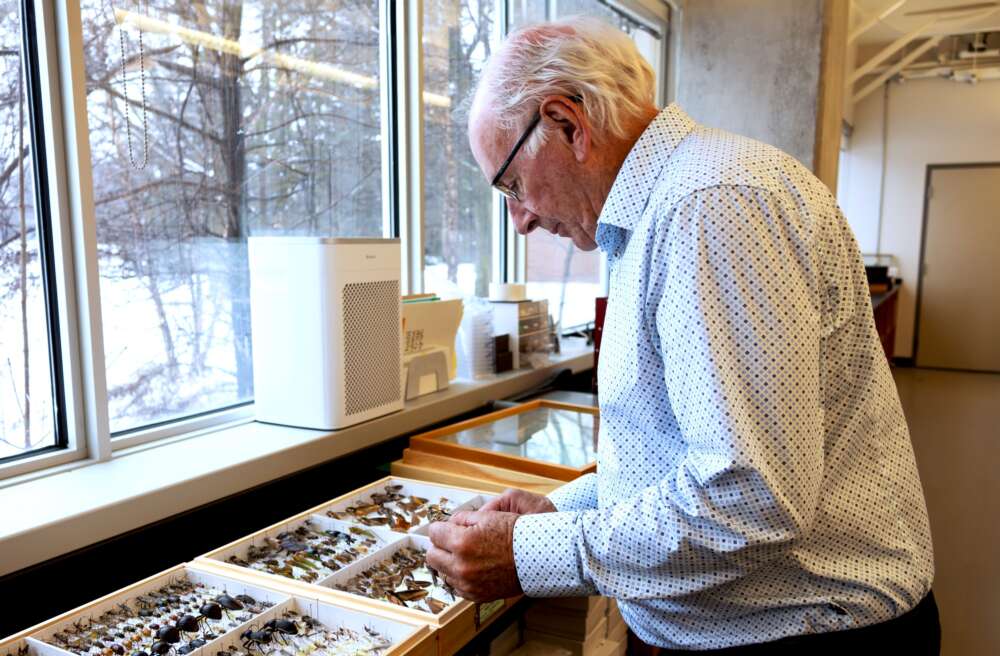
“We focus on providing deep insights into patterns of global diversity from very small amounts of DNA,” says Hebert. “By reading just a millionth of the genome, we can pinpoint the species that DNA came from which allows us to map where species occur, estimate their numbers and explore how they interact with each other.”
With biodiversity loss becoming more of a global challenge, mapping and monitoring life on Earth is critical for protecting ecosystems and informing conservation planning.
Hebert says this award will refresh infrastructure required for the CBG to meet its mission, including modernizing equipment, reconfiguring space and expanding its building. As the founding member and central node of the International Barcode of Life Consortium, the Centre collects and analyzes specimens from organizations all over the world.
“Our facility processes millions of specimens per year into DNA extracts and then sequences them, and demand for these services is surging,” he says. “Newer machinery, better computer systems, and more laboratory and storage space will take our capacity to the next level.”
Greater processing capacity will also be key for the centre’s future plans to launch a mega-science project, called Planetary Biodiversity, that aims to register every multi-cellular species on Earth by 2045.
Other U of G collaborators on the Innovation Fund grant are Drs. Mehrdad Hajibabaei, Andrew MacDougall and Xin Zhou, also from the Department of Integrative Biology; Dr. Nigel Raine from the School of Environmental Sciences; and Dr. Graham Taylor from the College of Engineering. Other collaborators include McGill University, the University of Toronto, Western University and York University. Simon Fraser University and the University of Victoria also contributed support.
Other U of G researchers supported by the Innovation Fund
As part of this announcement, two U of G researchers are working on projects led by other universities and supported by the Innovation Fund program.
- Dr. Alejandro Marangoni, professor in the Department of Food Science, Ontario Agricultural College, is a collaborator on the project Building a Future for Canadian Neutron Scattering, Part 2, led by McMaster University.
- Dr. Susan Brown, professor in the School of Theatre, English, and Creative Writing, College of Arts, is a collaborator on the project Open Science Infrastructure for Canad(ian)a: Digital Collections of the Future, led by the University of Ottawa.