

A University of Guelph sociology professor and femicide researcher has co-authored a major new report that provides analysis of a decade of gender-based violence in Atlantic Canada.
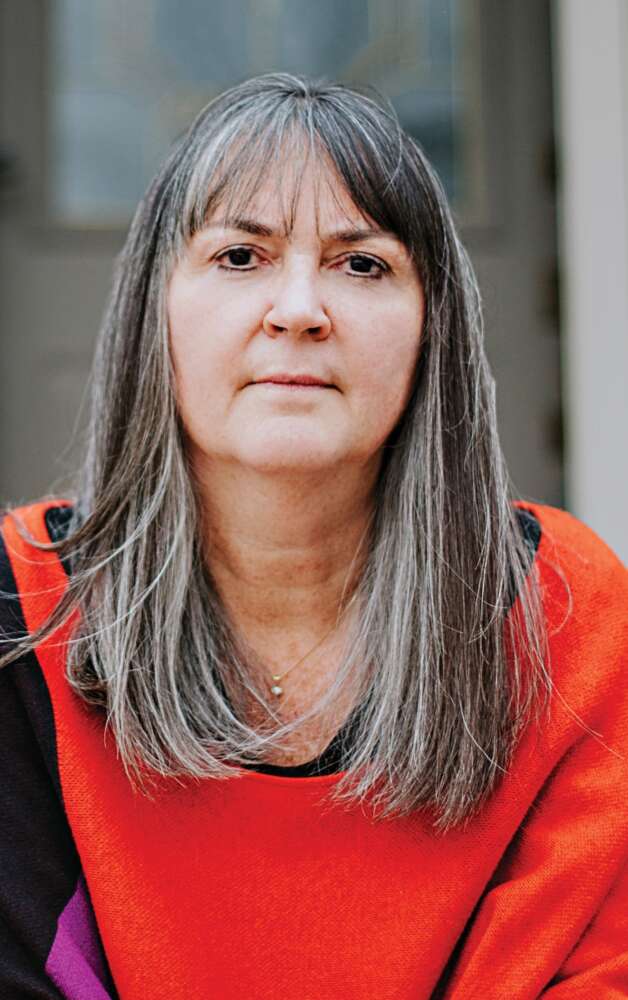
Dr. Myrna Dawson, professor in the College of Social and Applied Human Sciences, is the lead author of Preventing Domestic Homicides in Atlantic Canada: Looking Back to See Our Way Forward.
A decade-long analysis of intimate partner violence-related homicide, the report calls for stronger prevention efforts, as well as better data collection and collaboration.
The report was commissioned by the Atlantic Domestic Homicide Review Network, convened through the Council of Atlantic Premiers. In 2020, they called on the Centre for the Study of Social and Legal Responses to Violence (CSSLRV) at U of G, directed by Dawson, to provide analysis and insight into the context in which domestic homicides occur in Atlantic Canada to develop preventative measures.
The CSSLRV’s report examined the stories of 75 victims of intimate partner violence-related domestic homicide (IPV-DH) in Atlantic Canada between 2012 and 2022. The report provides 14 recommendations aimed at strengthening data collection to support more effective responses to IPV-DH in the region.
Dawson has spent decades researching femicide and intimate partner violence. She founded the CSSLRV in 2005 to research the effectiveness of social and legal responses to multiple forms of violence, including sexual assault, intimate partner violence, elder abuse and others.
Led by Dawson along with several graduate students and research associates from diverse disciplines, the CSSLRV strives to mobilize knowledge to inform public policy and develop violence-prevention strategies.
In 2017, Dawson also founded the Canadian Femicide Observatory for Justice and Accountability (CFOJA), which systematically tracks the killings of women and girls in Canada, and documents criminal justice and media responses. It creates an annual report providing statistics and insights into the killing of women and girls in Canada.
For several years, the CFOJA has asked Canadians to #CallItFemicide, to recognize the killing of women and girls by men as a distinct type of violence.
‘Too True Crime’ spotlights women & girls killed by femicide
This past Nov. 25, to mark the International Day for the Elimination of Violence Against Women, the CFOJA launched Too True Crime a podcast that spotlights the real stories of every woman and girl killed by femicide in Canada since 2020.
Designed as a record of at least 580 lives lost to femicide since 2020, the podcast tells each victim’s story to reveal the pervasive frequency of femicide across Canada, and to demand that Canada recognize femicide as a national crisis.
On the same day, Dawson authored a related commentary for The Conversation Canada. Both call on Canada to officially recognize the crime of femicide in the Criminal Code.
“A femicide law would recognize that male violence against women and girls is systemic and requires attitudinal shifts in Canada’s cultural values,” Dawson wrote.
Earlier this week, the federal government announced a plan to add femicide to the Criminal Code, and classify all cases of femicide as first-degree murder even if the crime was not planned or deliberate.