
Nine University of Guelph researchers have received this year’s Research Excellence Awards for their groundbreaking work in areas ranging from health and sustainability to society, technology and culture.
The $5,000 awards, presented each year by the Office of Research and the Office of the Provost, recognize newly tenured faculty members for their research, training and knowledge mobilization accomplishments and enhance their visibility among external funders.
“The University proudly celebrates these nine faculty members and their outstanding commitment to delivering research with impact,” says Dr. Shayan Sharif, interim vice-president (research and innovation). “We look forward to seeing their contributions evolve even further as they continue to establish themselves as leaders at the forefront of their disciplines.”
College of Arts

Dr. Cathryn Spence, Department of History
Spence is an internationally recognized historian who studies the economic and social lives of women in early modern Scotland. Her research and written works have reshaped our understanding of history by shedding light on the unseen economic activities of Scottish women during this time period, as well as their roles in faith, politics and domestic life.
College of Biological Science

Dr. Georgina Cox, Department of Molecular and Cellular Biology
Cox is a leading expert on pathogenic bacteria and Canada Research Chair in Antimicrobial Resistance (AMR). Through her research program, she investigates mechanisms used by gram-negative bacteria to evade antimicrobials and enhance virulence, then harnesses these findings to guide new drug discovery efforts and strategies to overcome the global threat of AMR.
College of Computational, Mathematical and Physical Sciences

Dr. Leanne Chen, Department of Chemistry
Chen is an interdisciplinary scientist and emerging global leader in computational electrochemistry. By developing computer models and simulations to understand and predict chemical reactions, she explores ways of using renewably generated electricity to drive chemical processes that can store energy for later use – an approach that could lower reliance on fossil fuels and reduce greenhouse gas emissions.

Dr. Mihai Nica, Department of Mathematics and Statistics
Nica’s research focuses on probability, stochastic processes and their applications to machine learning. In his work, he applies probability tools to deep neural networks, a set of algorithms underlying machine learning technology that can be used to recognize patterns, to better understand their behaviour and possible applications.
College of Engineering
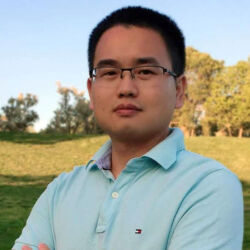
Dr. Sheng Yang, Department of Mechanical Engineering
Yang is a smart manufacturing and digital transformation expert working to enhance the resilience, sustainability and efficiency of engineering systems. Using tools like design theory, digital twins (virtual models of physical objects, people or processes) and artificial intelligence, his research is driving advancements in human-robot collaboration, autonomous 3D printing and precision agriculture.
College of Social and Applied Human Sciences

Dr. Faisal Moola, Department of Geography, Environment & Geomatics
Moola is a leader in the field of biocultural conservation. His work integrates the natural and social sciences, recognizing the interconnectedness of nature and the cultural relationships that Indigenous Peoples and Local Communities have with it. Working with Indigenous Peoples in Canada and North Africa, Moola’s research program shows the importance of Indigenous knowledge systems and traditional stewardship practices for the protection of biodiversity, ecosystems and culture.
Gordon S. Lang School of Business and Economics
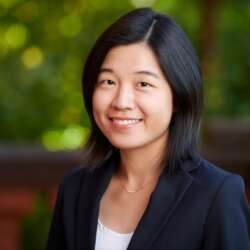
Dr. Jing Wan, Department of Marketing and Consumer Studies
Wan’s research explores the intersection of marketing and psychology, examining factors that influence human behaviour and decision making. By studying feelings, mindsets and information framing, her work highlights how emotional management and regulation affect consumer choices, and how psychological concepts can be used to encourage ethical consumption and sustainable practices.
Ontario Agricultural College

Dr. Jesse Popp, School of Environmental Sciences
Popp, a member of Wiikwemkoong Unceded Territory and Canada Research Chair in Indigenous Environmental Science, works to advance environmental science by weaving Indigenous knowledge systems with Western scientific approaches. She co-leads community-based, collaborative projects with Indigenous communities to address ecological issues, ensuring research is conducted ethically, respectfully and in genuine partnership.
Ontario Veterinary College
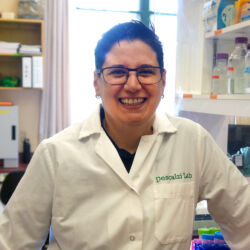
Dr. Giannina Descalzi, Department of Biomedical Sciences
Descalzi is an internationally recognized researcher who studies the mechanisms of pain and its relation to mental and emotional health. Her work bridges preclinical research models with molecular biology, genomics, and systems neuroscience to determine the pathways involved in promoting chronic pain and associated depression and anxiety symptoms.